
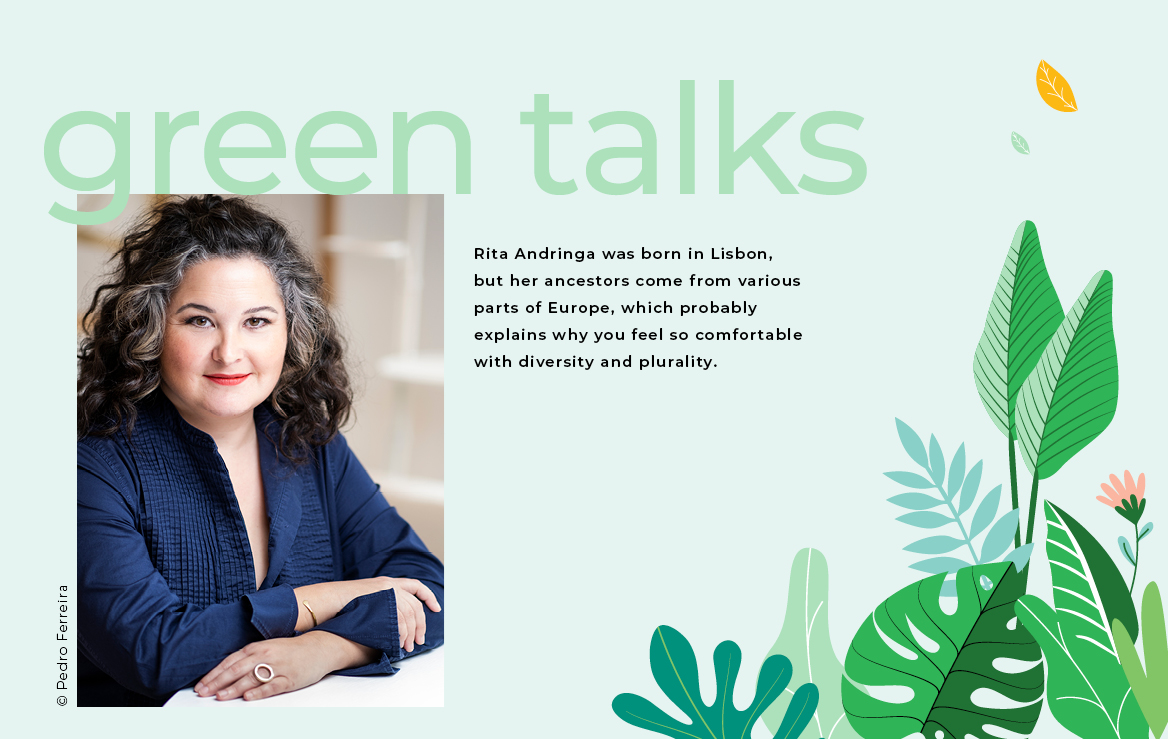
Rita Andringa graduated from IADE in Lisbon as an Interior Designer in 1999, and since then has collaborated with several design and architecture studios in Lisbon. A very important part of her professional career was spent working with Vera Iachia, the Portuguese Interior Designer internationally recognized for her interiors in Comporta, one of Portugal’s best-kept ecosystems.
In 2015, she began signing projects under her own name with the foundation of what would become Andringa Studio, a multidisciplinary atelier that promotes dialogue between interior design, architecture, and landscaping. Her signature includes the heritage of the Comporta Style but goes far beyond it, both in terms of approach and territory, with projects in Mexico, Spain, and the United States of America. Rita is always driven by beautiful things and has always been passionate about Art, History, Gardens, and Gastronomy.
What led Andringa Studio to choose Horto do Campo Grande for this very particular project?
Horto do Campo Grande gives us a quick response that combines a service with products and vegetation that meet most of our needs, especially in an urban environment. Of course, they are the top-of-mind reference that remains in the imagination of those who have always lived in Lisbon, but they are also an excellent solution for professionals.
How would you describe the relationship with the HCG team throughout the entire process? The team’s availability and professionalism, the variety of the offer, the speed of execution…
The team was always effective, from the first phone calls to the resolution of the usual setbacks. The process unfolded alongside our project phases, and Horto do Campo Grande was able to present us with appropriate solutions at each stage.

Do you agree that plants, and landscaping more broadly, are increasingly perceived as indispensable in the decoration of indoor and outdoor spaces, due to the benefits they bring in terms of well-being, enjoyment, and also in the valuation of projects? How is their introduction received in the projects you do?
The use of plants in built interiors and outdoors works as a kind of imago mundi, bringing a symbolic and sensory reflection of nature into the inhabited space. Beyond aesthetics, they are a connection to nature. Outdoors, they structure and enhance spaces, promoting well-being and integration with the surroundings; indoors, they introduce freshness, texture, and vitality, contributing to air quality and a more inspiring atmosphere.
The terrace of this apartment has become an extension of the house. Horto do Campo Grande developed the Horto Collection brand, which offers custom-made planters, with the possibility of choosing the color desired by the client. Do you consider products like these to be an asset for interior design studios? How did these solutions help transform the outdoor space?
Of course they are an asset, as we have an almost architectural response in the extension of the space, which we can then complement with other pieces with more personality. These planters have proven to be very important in our urban outdoor projects.
The species chosen were selected to bring privacy and create comfort zones. Do you feel that this balance was achieved?
Yes, in addition to seeking to ensure privacy and create comfort zones, there was also a concern to introduce diverse flora, capable of enriching the experience of the space. This diversity allows not only for greater aesthetic and sensory richness but also reinforces the idea of a natural and welcoming environment, in harmony with the architectural and landscape context.
If you had to summarize the impact of HCG’s work on this project in one sentence, what would it be?
Horto do Campo Grande brought to this project the perfect combination of know-how, technical knowledge, and sensitivity, transforming the spaces with vegetation that adds comfort, identity, and harmony.
Discover other details of this project here.
Photographs © Rodrigo Cardoso


