
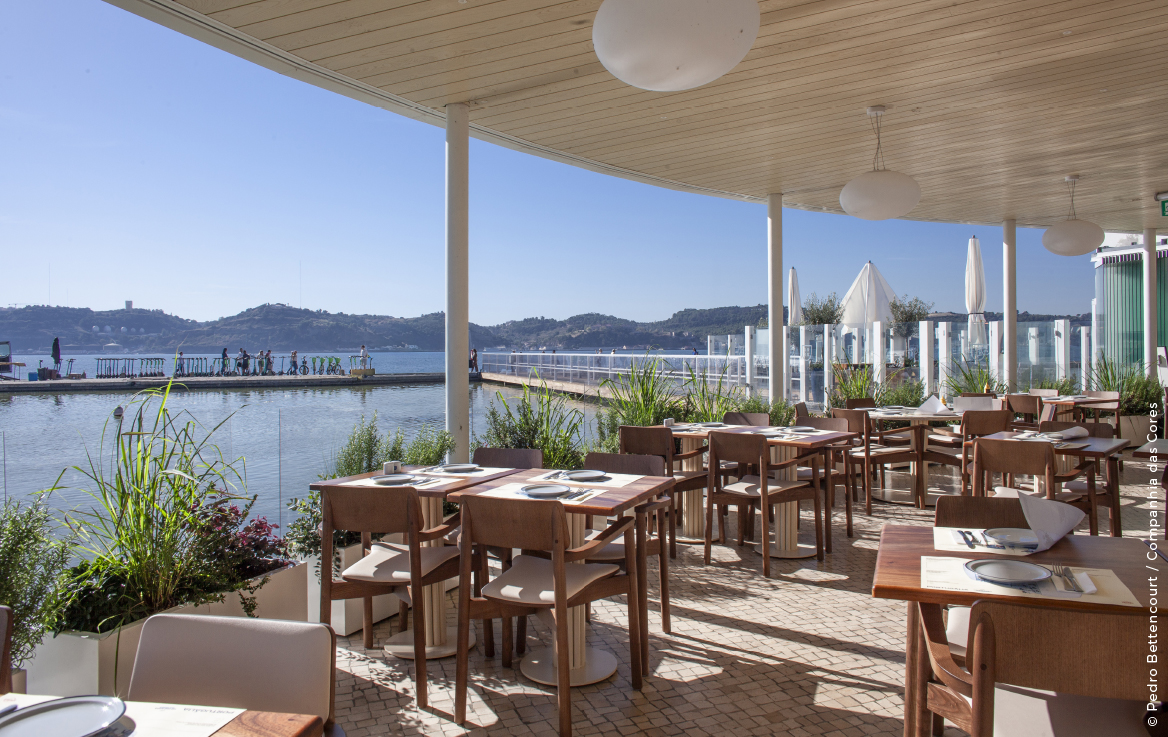
With a history spanning generations, Portugália is one of the best-known names in the restaurant sector in Portugal. On June 10, 2025, it celebrated its centenary. A century of history only made possible by staying true to its roots while simultaneously projecting itself into the future—opening new spaces, acquiring new brands, and developing concepts that keep pace with the sector’s evolution and the increasingly demanding expectations of customers.
In an interview celebrating its centenary, the Portugália Group shares with us how it views its legacy and what it has been building, its adaptation to the growth of tourism in Portugal, and the importance of partnerships like the one it has with Horto do Campo Grande (HCG), which have elevated the customer experience.
100 years of history is a source of pride and, at the same time, a great responsibility. How do you view this legacy?
Reaching 100 years is undoubtedly a reason for enormous pride. Particularly in the restaurant sector, where, on average, the longevity of a restaurant rarely exceeds 5 years. Therefore, celebrating this milestone is important, not just as recognition, but also as a moment to thank everyone who has been part of this journey. However, this centenary also represents a great responsibility: ensuring the group is prepared for the next 100 years. Adapting our brands to the market and the sector’s evolution is fundamental, which is why the recent rebranding of the Portugália brand was one of our initiatives to ensure the brand’s relevance in the future, highlights the representative of the Portugália Group.
Tourism has been growing in Portugal, particularly in Lisbon and Porto. What opportunities has this provided and what challenges has it brought to the restaurant sector in general, and to the group in particular?
The growth of tourism has brought great opportunities for the restaurant industry in Portugal, but it has also generated challenges at various levels. The increase in the number of tourists required the group to adapt, not only in terms of customer care and service quality but also in how we communicate and interact with this audience. For us, it is essential to ensure that, besides being relevant to tourists, we offer an excellent dining experience, ensuring not only immediate turnover but also contributing to the continuous valuation of Portugal as a world-class tourist destination.
The Portugália Group currently owns other brands. What motivated this strategy?
The goal has always been to be a reference group in the restaurant sector. To achieve this, we understand that it is essential to have strong, well-positioned brands that stand out in their respective areas. Having brands like Portugália, La Brasserie de L’Entrecôte, Cervejaria Trindade, and Cervejaria Ribadouro in our portfolio allows us to consolidate our market presence and continue to offer a diverse, high-quality range to our customers.
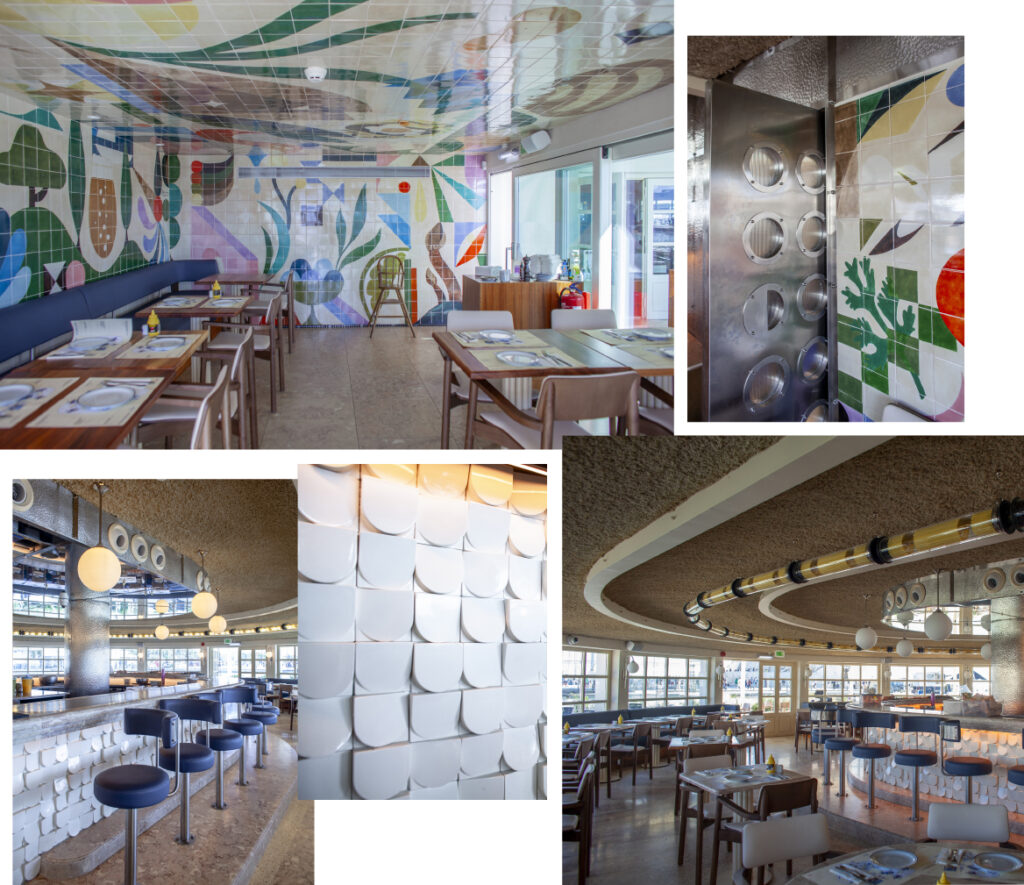
The choice of location for opening new spaces is even more strategic today. How is this selection made and which ones do you consider the most emblematic?
Location is crucial to the success of any business; in the restaurant sector, it is even more important. This selection takes into account the brand’s positioning, compatibility with the target audience, and the logistical characteristics of the space. The location must be consistent with the brand’s offering and ensure a quality experience for customers. Among the most emblematic spaces, Padrão dos Descobrimentos stands out—a site with strong historical symbolism that offers a unique combination of a privileged location and a very characteristic atmosphere.
The Group has been refurbishing its spaces and, in this renovation, plants have gained prominence, both indoors and outdoors and in their respective entrances, as was the case with Portugália Cervejaria Belém, in the emblematic Espelho d’Água building, next to the Padrão dos Descobrimentos.
What is the reason for this focus on introducing plants into the decoration of the spaces? How does it add value and contribute to reinforcing the identity of the spaces?
Plants have a striking presence wherever they are. The relationship with natural elements translates into welcoming and comfortable environments, immediately creating a sense of ‘home’ for those who visit the space. The introduction of greenery in the decor helps soften the environment and offers a more relaxing experience by creating an atmosphere of greater harmony, making the spaces cozier and more connected to nature, explains Inês Moura, the architect who designed the group’s spaces.
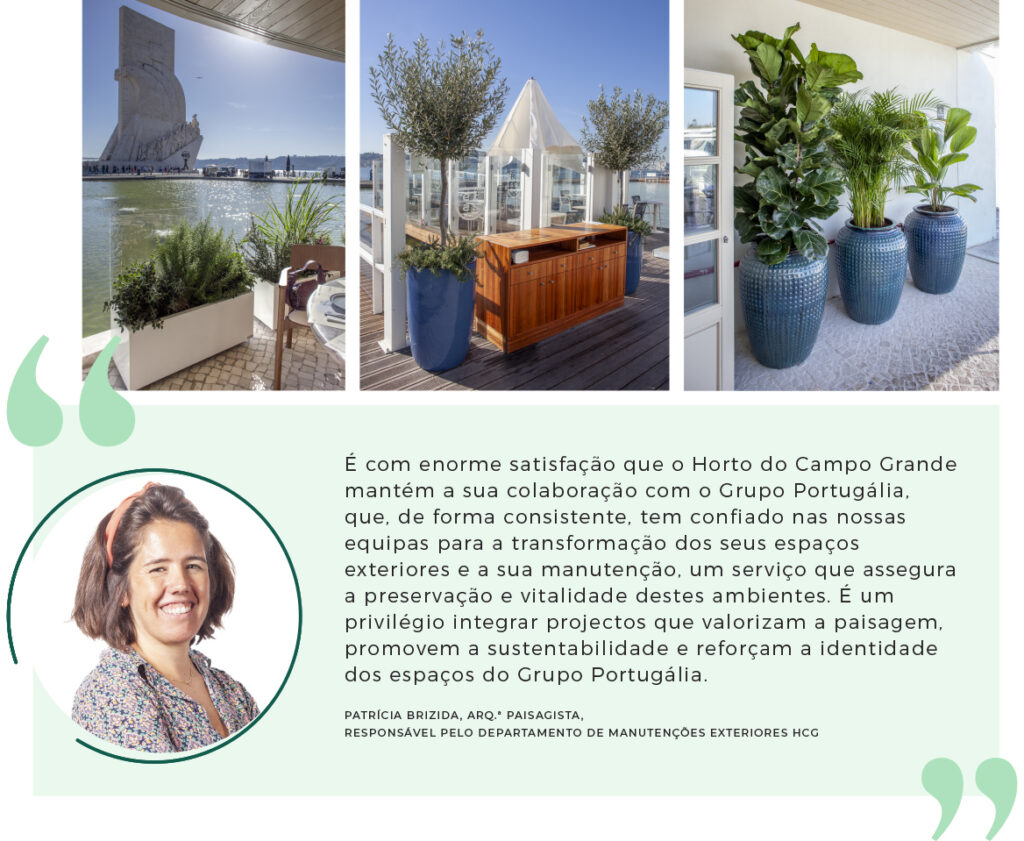
You chose HCG as your partner to support this ‘green intervention’. How would you define the relationship established with the team, both in terms of proposals and in terms of availability and speed of execution?
The partnership with HCG has been fantastic and has grown over the last few years. The team is highly efficient and always ready to help, from the first proposal to the final execution. HCG has been a trusted partner, whether in specific refurbishments, like Portugália Cervejaria Belém, or in other projects. The team’s availability and dedication are always evident, which reinforces the bond between the two entities.
Outdoor terraces are highly sought after and valued by customers today. How do plants manage to enhance these spaces?
According to architect Inês Moura, Portugal’s climate naturally invites the creation of outdoor terraces, perfect spaces for al fresco dining. Integrating plants into these environments creates the feeling of being in a garden, offering a calmer and more welcoming refuge. It is certain that plants help soften the urban aesthetic by creating a more peaceful and inviting space for customers, allowing them to enjoy their meal in an environment that evokes nature.
The Horto Collection planters, made-to-measure and with a personalized finish, were the option chosen to create a barrier all around the terrace area of Portugália Cervejaria Belém. How do these tailor-made solutions meet your needs?
All the Group’s architectural projects are bespoke, highlights Inês Moura, which means every detail is designed to meet the needs of the client and the space. The possibility of creating personalized planters was fundamental to ensuring the design of the space was unique and consistent with the brand concept. These tailor-made solutions elevate the intervention, creating an experience that perfectly fits the identity of the location.
In addition to the project and its execution, the Portugália Group also used HCG’s maintenance service. What do you consider to be the added value of this service?
The maintenance service is a crucial asset. HCG has been extremely rigorous in maintaining the plants, which ensures the spaces always remain impeccable. The maintenance team is professional and carries out the plant care plans efficiently. The integration of installation and maintenance services further strengthens the partnership between the entities, offering continuous, high-quality support.
We spoke with Patrícia Brízida, head of the Exterior Maintenance department at Horto do Campo Grande, to explain the selection of species for this space:
“The species Metrosideros sp., Myrtus communis, Rosmarinus officinalis, Loropetalum chinense, Pittosporum tobira ‘Nana’, Stipa tenuissima, and Festuca sp. were selected for this project for their variety of textures, colors, and foliage types, which provide contrast, movement, and visual interest to the space throughout the year. In addition to their ornamental value, they all show high tolerance to sun exposure, wind, and proximity to the river, ensuring optimal adaptation to the local environmental conditions. This selection combines aesthetic quality, landscape coherence, and sustainability, resulting in a harmonious, resistant, and visually balanced ensemble.”
Photographs © Pedro Bettencourt