
The Hyatt Regency Lisbon recently opened in Belém, a development that combines hotel and investment components. This distinctive and exclusive project marks the arrival of one of the world’s largest hotel chains, Hyatt, to the Portuguese capital, by United Investments Portugal. Horto do Campo Grande is proud to be part of this project, where nature integrates into the hotel’s luxurious environment.
The hotel features modern décor, inspired by Portuguese discoveries, and superior quality finishes. The 204 rooms, of which 105 are suites, enjoy stunning views over the Tagus River.
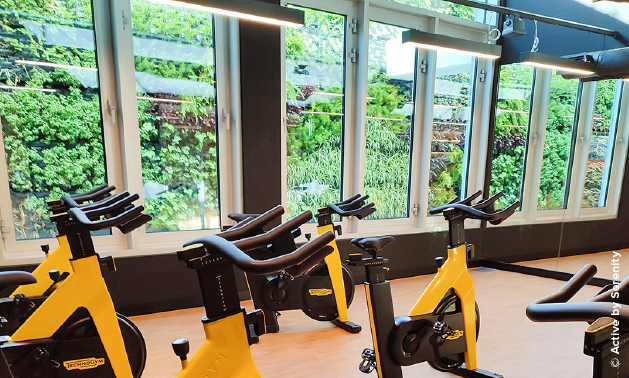
For guests who like to stay active, even away from home, the Hyatt Regency Lisbon offers a space, Active by Serenity, which includes a gym and two fitness studios for classes.
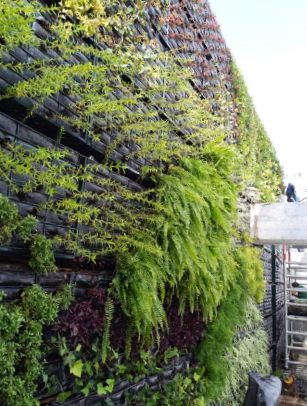
Vertical garden under construction
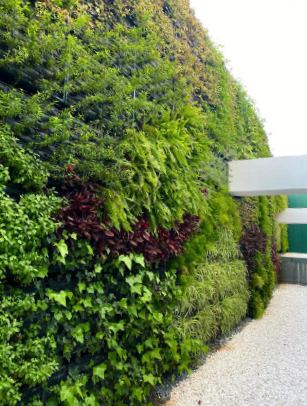
Completed vertical garden
Gastronomic experiences are a distinctive feature of the hotel, which offers a wide and diverse range: the VISEVERSA restaurant and bar, in a “grand-café” style, ZEST, for quick and healthy lunches and snacks, UMAN, for those who want to explore an exclusive chef’s menu celebrating flavors from around the world, and ICON, on the rooftop, with a panoramic view over the Tagus River.
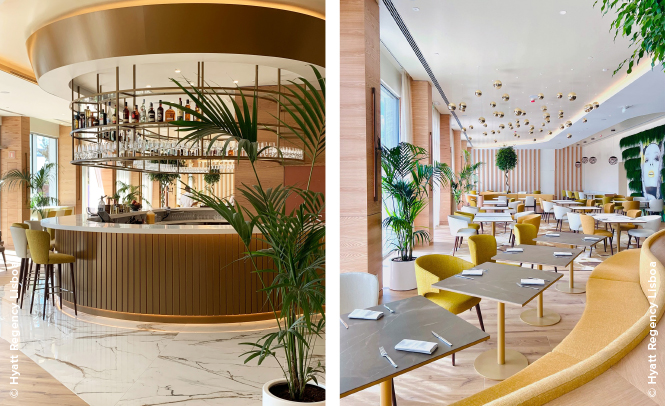
ViseVersa restaurant and bar
The hotel hosts the Portuguese luxury brand dedicated to health and wellness, Serenity – The Art of Well Being. A spa with over 1,000 m2, with a wide range of wellness activities tailored to individual client needs, capable of providing unique moments and memorable experiences.
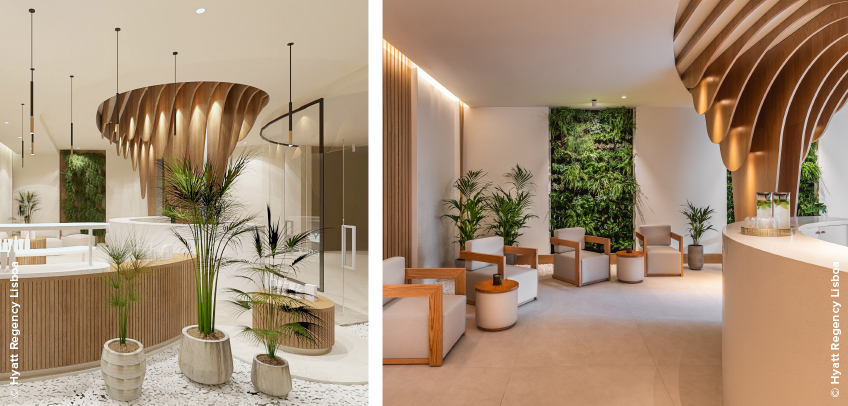
Serenity Spa
Horto do Campo Grande’s proposal
The plant selection made by the Horto do Campo Grande technical team for the Hyatt Regency took into account the characteristics and functionality of the spaces where they were placed, explains Eng. Vera Quintas, responsible for the project’s execution.
“In the Spa area, we took into account the existing low light and high humidity conditions, so the selection focused on tropical plant species adapted to these climatic conditions.”
At the Spa reception, two natural vertical gardens stand out in the décor of the space with light tones and natural materials. These vertical gardens were covered with indoor plants adapted to local conditions – Chamaedorea elegans, Spathiphyllum, Scindapsus, etc.
To define spaces and create greater privacy, the project included the creation of “hedge” structures; for these “natural screens” the following species were chosen: Aglaonema, Dracaena Marginata, Kentia (Howea Forsteriana), Monstera Deliciosa, Spathiphyllum and Zamioculcas Zamifolia.
The selection of plants in the side bed of the indoor pool, an area with greater light, focused on tropical species more resistant to direct light, such as Dypsis Lutescens (Areca), Philodendron Xanadu, Sansevieria Trisfasciata, Strelitzia Nicolai and Zamioculcas Zamifolia.
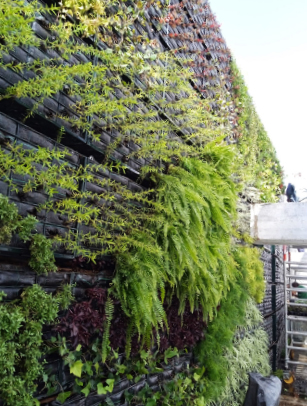
The large outdoor vertical gardens, which can be seen by those in the gym, follow a puzzle-like pattern with rectilinear pieces, where the different pieces were covered using a variety of species with different colors, textures and lengths, stratified according to light conditions – Asparagus, Cupheas, Hedera helix, Lantana montevidensis, Santolina chamaecyparissus, Tradescantia zebrina, etc.
For the ViseVersa Restaurant and Bar, we chose Ficus Benjamina in tree format to place in the middle of the circular benches and Kentias (Howeas Forsterianas) to decorate the space, which are in white fiberglass planters with the HC signature – Horto Collection, very resistant pieces with casters that allow easy movement, either to change the plant’s location or to facilitate cleaning of the space. But the main highlight of this restaurant’s interior design project is the artistic installation on the interior wall of the space, which represents a woman whose hair was simulated through the creation of a vertical green structure with Rhipsalis Baccifera.
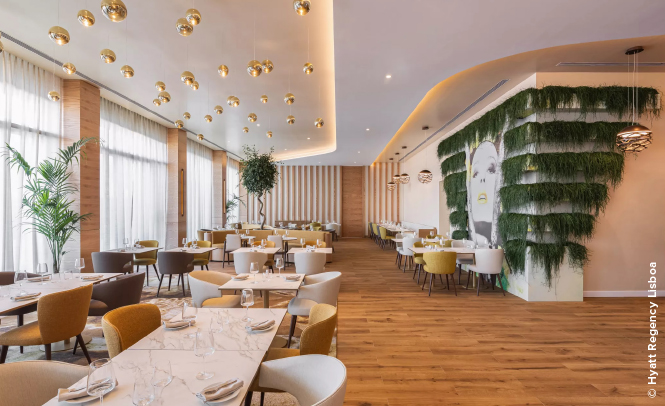
ViseVersa restaurant and bar
Discover the selection of floor plans for this project
Aglaonema Asparagus Chamaedorea elegans Cuphea Dracaena marginata Dypsis lutescens (Areca) Ficus benjamina Hedera helix Kentia (Howea forsteriana) Lantana montevidensis Monstera deliciosa Philodendron xanadu Rhipsalis baccifera Sansevieria trisfasciata Santolina chamaecyparissus Scindapsus Spathiphyllum Strelitzia nicolai Tradescantia zebrina Zamioculcas zamifolia