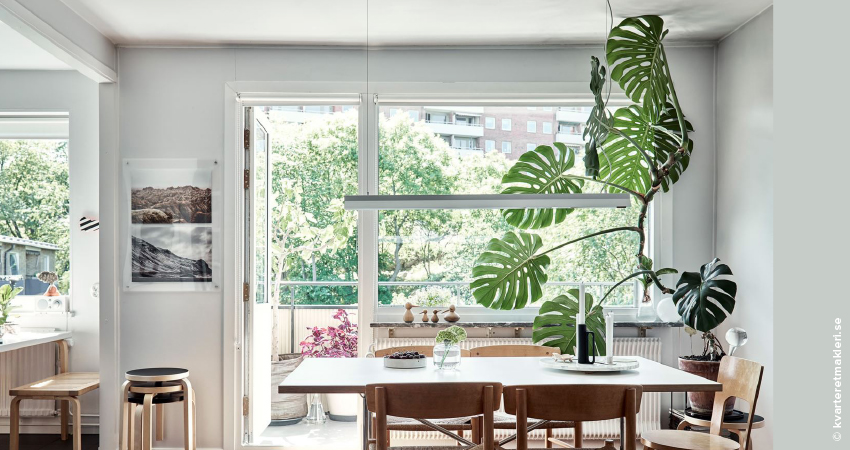
With its lush foliage, the Monstera, or Swiss Cheese Plant, makes any environment feel… tropical. This plant, which has become a decor trend, is perfect for a bright room or a bathroom with some light—a warm and humid spot. Easy to care for, it’s the ideal plant for those starting out in the art of gardening and wanting to begin their own indoor jungle!
Common Names Swiss Cheese Plant
Family Araceae
Origin Tropical forest. Southern Mexico
Did you know…
The word Monstera literally means “monstrous” in Latin, and the plant was given this name due to the size of its leaves, which are much larger than those of most ornamental plants?
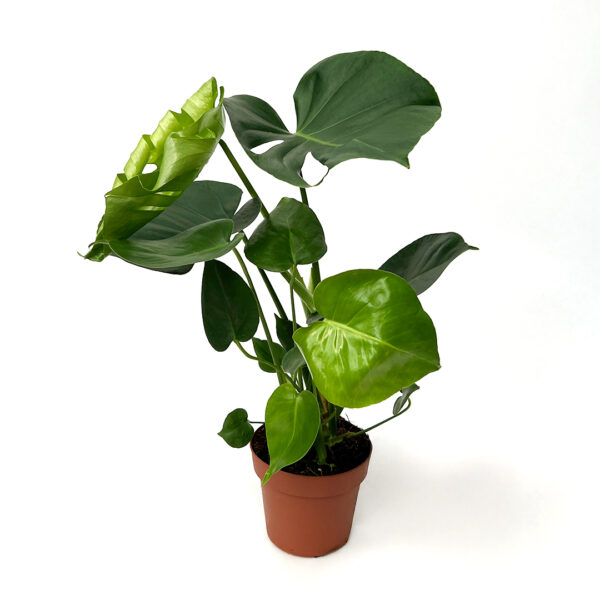
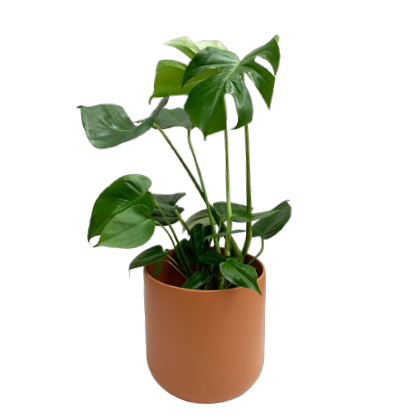
Main characteristics

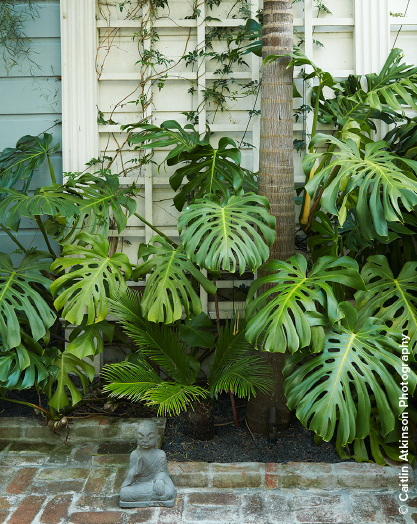
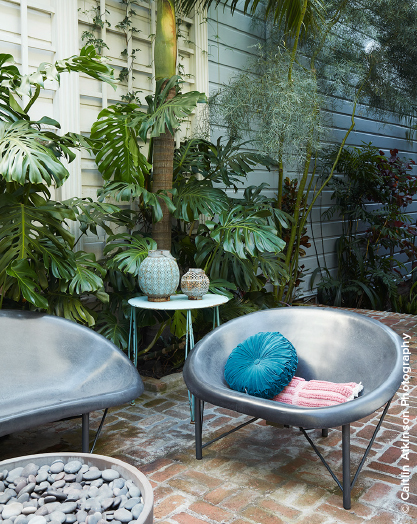
Variety of species
With more than 60 existing species, we highlight the most popular ones:
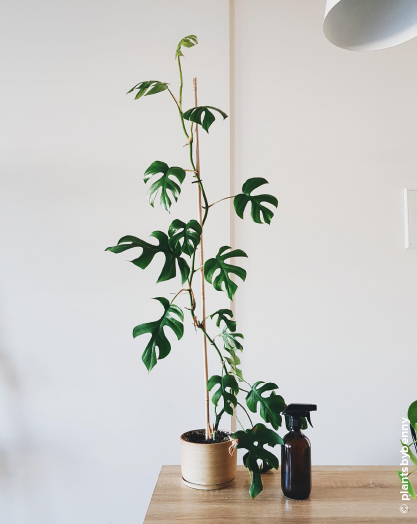
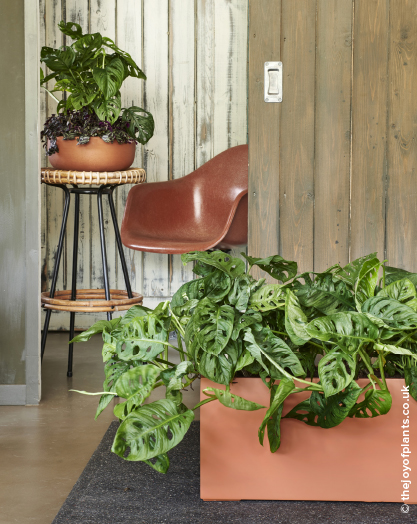
Monstera deliciosa, Monstera obliqua, Monstera pertusa, Monstera accuminata, Monstera adansonii.
Fun fact
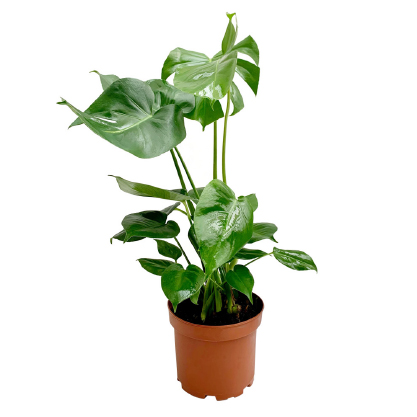
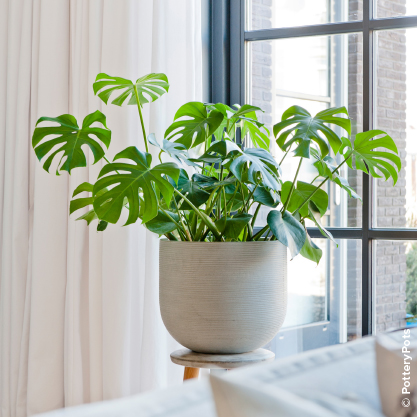
Its green, shiny, heart-shaped leaves become split and perforated as they age.
They are said to resemble Swiss cheese, hence the name “Swiss Cheese Plant”, due to their funny and peculiar holes.
How to care
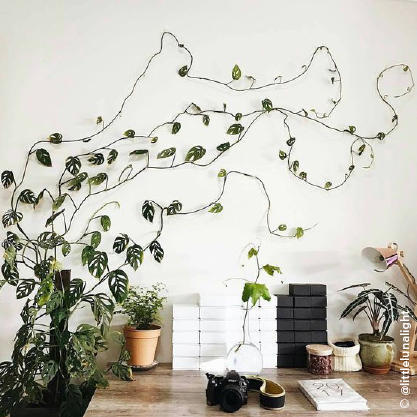
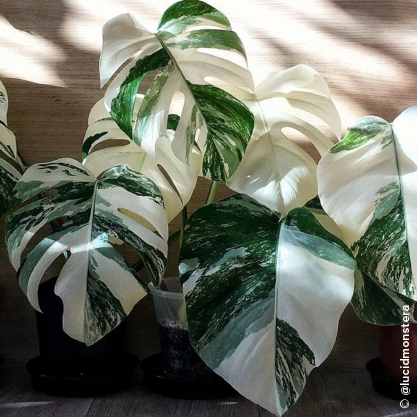
It is a low-maintenance plant that is resistant to missed waterings, pests, and diseases, but to keep its lush foliage looking beautiful, it needs some care.
Light: Native to a tropical environment, the Monstera adapts to a wide variety of light conditions. It prefers plenty of indirect (or filtered) light but tolerates darker environments and even direct sun.
Watering: In the case of the Monstera, it’s always better to underwater than to overwater! Excess water, or poor drainage, can cause root rot.
Temperature: As a tropical plant, the Monstera prefers moderate temperatures (between 18 and 24 ºC), but as a hardy plant, it can withstand cooler temperatures.
Substrate: The soil should be a forest soil rich in organic matter. Repotting should be done in Spring or Summer, for mature plants, every 2 or 3 years.
Care: The Monstera is not pet-friendly.
Monstera leaves and stems contain toxic substances that can cause serious poisoning if ingested. Nausea and headaches are some of the symptoms that can arise, so it’s very important to pay attention—especially after cutting leaves or pruning the plant—when children and pets are nearby, as mere contact can cause serious problems.
Suggestions
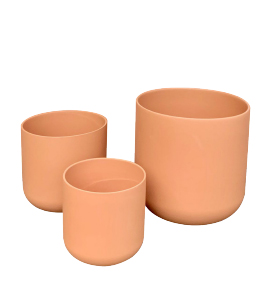
in fine, lightweight ceramic
© Horto do Campo Grande