

After years of limiting ourselves to urban spaces, big cities, and technological screens, we have inevitably been losing the innate connection that binds us to nature. Today, aware of the benefits the natural world brings us, we seek to recover that forgotten relationship. Bringing nature into urban environments is one of the solutions made possible thanks to biophilic design. A broad concept where it is understood that re-establishing a relationship with nature is about promoting interaction, with reciprocal benefits.
Every human being has a fundamental need to connect with nature. Have you ever wondered why we love feeling the sun on our skin? Why do we have a unique sense of serenity when we gaze at the sea? Why do we feel refreshed when we walk in a garden or a forest?
Science explains it to us: it is the energy of nature. Nature relieves stress, helps people think more clearly and positively, sparks creativity, and promotes well-being.
In harmony with nature
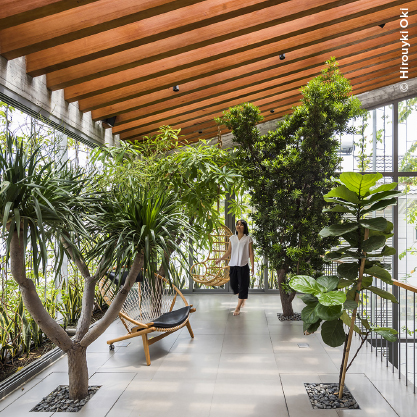
And if for years we moved away from nature and outdoor life, today we see a great need to reconnect with the natural world. However, the lifestyle many of us lead doesn’t leave enough time to enjoy nature. So how can we bring it into our homes or workplaces? The answer lies in biophilic design, through which architects and interior designers incorporate elements of the natural world into built environments, transforming them into inspiring and invigorating places.

Fun Fact
Translated literally from Ancient Greek, the term biophilia means
“the love of life and all that is alive.”
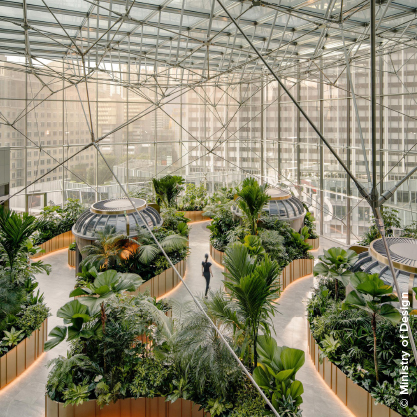
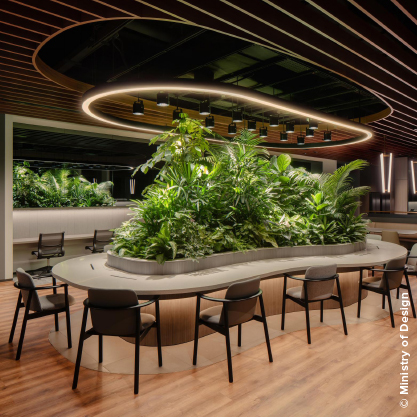
Including natural elements brings us closer to Nature
The introduction of plants into environments, beyond the natural beauty they provide, creates a direct link with nature, purifies the air, and promotes calm and concentration. But biophilic design can also be achieved using other elements of nature, such as water. Seeing, hearing, and touching water invokes a sense of tranquility or vitality. High ceilings promote air flow, conveying the feeling of being outdoors. Spaces that replicate local ecology and geology, through the use of wood or stone, gain beauty and authenticity. Other sensory stimuli, such as the simulation of sounds or scents of nature, create fresh, lively, and invigorating environments.
Goals and Advantages of Biophilic Design
The growing interest in biophilic design is not just due to the instinctive need for humans to connect with nature. Biophilia – biophilic design – promotes interaction between people and nature with reciprocal benefits and manifests in solutions where nature takes multiple forms, and its application must have a purpose in the space and meaning for those who will experience it. It can inspire through beauty, but it can also induce a sense of calm, happiness, or security, resulting in increased productivity levels in an office, for example, or higher consumption in a shop.
Still considered a luxury by many, the truth is that it should be seen as an investment. Scientific studies reveal and quantify numerous benefits for physical and mental health, with very positive impacts on society and the economy.
• Increases cognitive capacity (1) and, when incorporated into schools, can improve learning by 20 to 25% (2).
• In hospitals with biophilic design, patient recovery time decreases by 8.5% (3) and the use of pain medication is reduced by 22% (4).
• In workplaces, employee productivity improves by 8%. (5)
• On streets with vegetation, we tend to spend 25% more (6) and, in shops with biophilia, sales can increase by up to 40% (7).
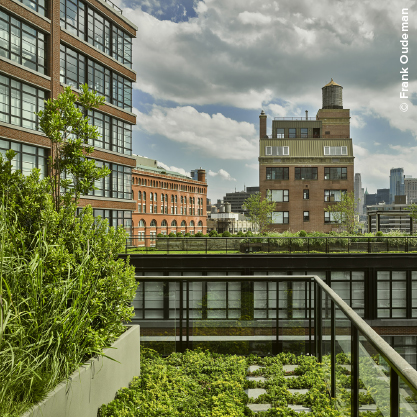
Although more common, the application of the concept is not exclusive to interiors, as we can have buildings, neighborhoods, or even entire cities that integrate the presence of the biophilic concept.

Biophilic Design Around the World
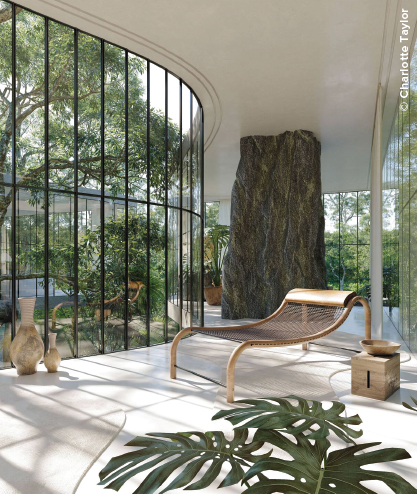
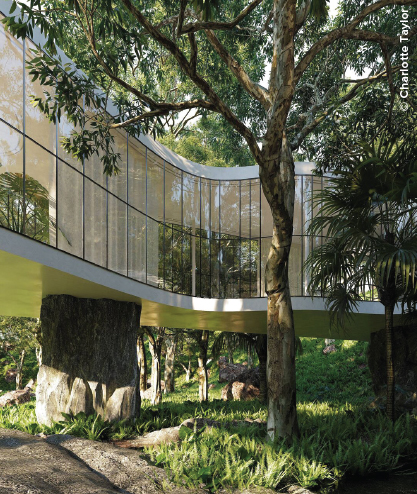
Atibaia House, São Paulo
Architects: Charlotte Taylor and Nicholas Préaud
Located on the Atibaia River, it is a tribute to Brazilian modernism and a prime example of biophilic design. The relationship between the interior of the house and the forest and all the surroundings inspires the feeling of living outdoors. In addition to the full glass facades, the entire structure is built around pre-existing rocks, which also occupy the interior functionally: some areas of the house are carved into these shapes, while smaller rocks act as furniture elements.
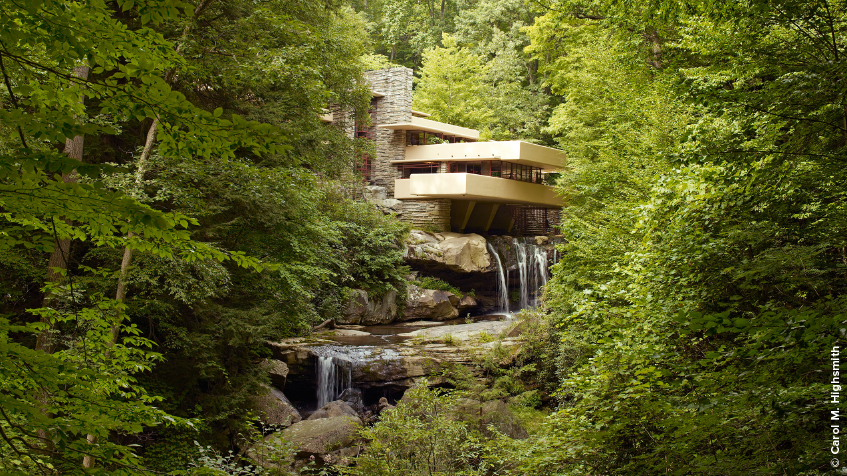
The Fallingwater House, Pittsburgh
Architect: Frank Lloyd Wright
The Fallingwater House, built over a waterfall using locally sourced sandstone, merges with its natural environment. Long before the concept was created, Wright built one of today’s leading examples of biophilic design.
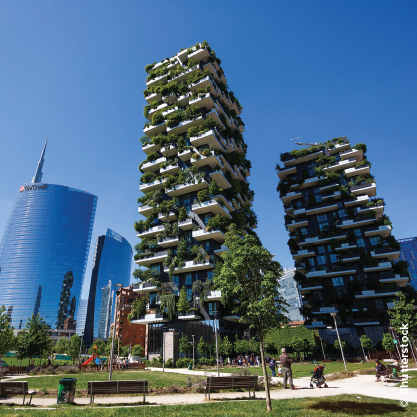
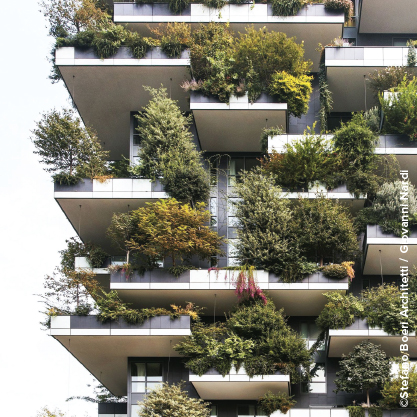
Bosco Verticale Building, Milan
Architects: Boeri Studio
This building does not go unnoticed in the city of Milan, and it’s not just because of its height. It is the first example of a vertical forest, an architectural concept that replaces traditional materials on surfaces with a layer of vegetation, increasing biodiversity and promoting the formation of an urban ecosystem capable of being inhabited by birds and insects. The building consists of two towers that house 480 large and medium-sized trees and another 300 small ones, 11,000 perennial and groundcover plants, and 5,000 shrubs.

Château de Vaux-le-Vicomte, France
The Château de Vaux-le-Vicomte is a 17th-century French Baroque castle (1658 – 1661), located in Maincy, near Melun, 50 km southeast of Paris, built by Louis XIV’s superintendent of finances, Nicolas Fouquet.
The gardens of the imposing Château de Vaux-le-Vicomte are valued not only for the views they offer of the castle but also for the terraces with predominantly horizontal flowerbeds. To the south of the castle, the surrounding gardens are most notable for their dimensions and refined style in the purest tradition of French gardens with fountains, statues, and chalk-cut paths. An inspiring work and one of the greatest examples through which biophilic design has stood out over time.
Let yourself be inspired by Nature. Horto do Campo Grande offers garden design, construction, and maintenance services so that you too can enjoy the benefits that only the natural world offers us.
Opening photo: Atibaia House, São Paulo / Charlotte Taylor and Nicholas Préaud © Charlotte Taylor
(1) – Kellert, S.F., J.H. Heerwagen, & M.L. Mador Eds. (2008). Biophilic Design: The Theory, Science & Practice of Bringing Buildings to Life. Hoboken, NJ: John Wiley & Sons.
van den Berg, A.E., T. Hartig, & H. Staats (2007). Preference for Nature in Urbanized Societies: Stress, Restoration, and the Pursuit of Sustainability. Journal of Social Issues, 63(1), 79-96.
(2) – Oliver Heath Design Ltd. (2019, June 25). Biophilic Design – connecting with nature to improve health & well being. Oliver Heath. https://www.oliverheath.com/biophilic-design-connecting- nature-improve-health-well
(3) – Oliver Heath Design Ltd. (2019, June 25). Biophilic Design – connecting with nature to improve health & well being. Oliver Heath. https://www.oliverheath.com/biophilic-design-connecting- nature-improve-health-well
(4) – Browning, W. D., Kallianpurkar, N., Ryan, C. O., Labruto, L., Watson, S., & Knop, T. (2012). The economics of Biophilia.
(5) – Ekienabor, E. E. (2016). Impact of job stress on employees’ productivity and commitment. International journal for research in business, management and accounting, 2(5), 124-133.
(6) – Oliver Heath Design Ltd. (2019, June 25). Biophilic Design – connecting with nature to improve health & well being. Oliver Heath. https://www.oliverheath.com/biophilic-design-connecting- nature-improve-health-well/
Newman, P., Beatley, T., & Boyer, H. (2017). Resilient cities: Overcoming fossil fuel dependence. Island Press.
(7) – Soderlund, J., & Newman, P. (2015). Biophilic architecture: a review of the rationale and outcomes. AIMS environmental science, 2(4), 950-969.
© Horto do Campo Grande