
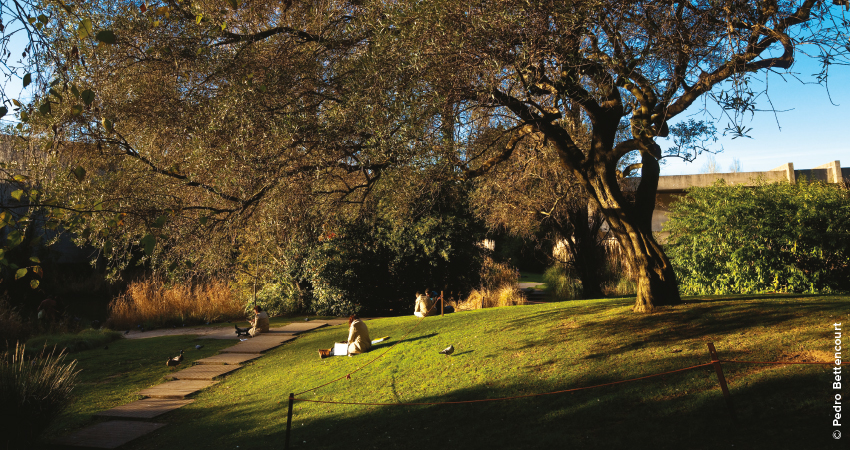
Like Father, Like Son! Celebrated on March 19, Father’s Day falls on a Wednesday this year. And the best in the world deserves the best of us—our time and our company. There are many experiences to choose from, but our suggestion is to celebrate this day outdoors, as it’s both healthy and highly recommended. Take advantage of the week to explore what Lisbon has to offer. Discover the gardens scattered across the city, learn about the history behind them, and contemplate the plants and trees, making this a memorable day for the whole family.
Known as the city of seven hills, Lisbon is famous for its picturesque squares and gardens, which offer moments of relaxation in the city center. Green spaces create the perfect balance between the urban and natural environment, standing out as places where nature and culture meet. Besides contributing to ecological balance, reducing air and noise pollution, and providing a refuge for flora and fauna, gardens are also social hubs where locals and visitors enjoy outdoor activities like picnics, walking, and running.
A vital part of the urban center, Lisbon’s iconic gardens represent the best of both worlds: nature and the city. It is important to preserve them, not only for individual well-being but also for the prosperity of the city as a whole.
Our suggestions:
- Gulbenkian Garden
Among trees and statues, a group of children plays hide-and-seek. By the lake, friends enjoy a lively picnic, while in the amphitheater, some take advantage of their lunch break to catch up on reading or simply unwind. A family of ducks strolls across the lawn, followed by the watchful eyes of a baby in its mother’s arms. And in sheltered corners, couples romance and make promises that time will test.
We are in the garden of the Calouste Gulbenkian Foundation, a place of leisure, culture, and nature, but also a symbol of the modern movement in Portugal and a benchmark for national landscape architecture. Inherent to the project are environmental and sustainability concerns that can be integrated into landscape design, as well as a growing focus on water management within the garden. The use of native plants and the promotion of biodiversity are some of the strategies implemented in the garden.
The space as we know it today resulted from a project by landscape architects António Viana Barreto and Gonçalo Ribeiro Telles, designed in the 1960s and honored with the Valmor Prize in 1975. Based on subtle geometry and utilizing the national landscape in its ecological and cultural dimensions, Viana Barreto and Ribeiro Telles’ proposal presents a unique and new garden made of spaces and environments that feel familiar to us. This is the modern garden at the height of its expression.
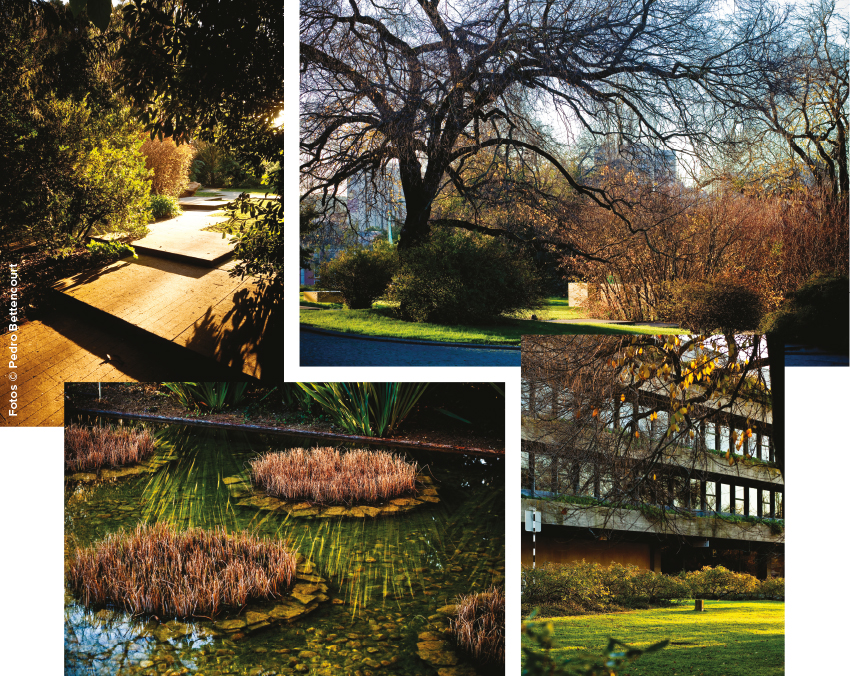
Developed in close collaboration with the architects of the foundation’s building complex—Alberto Pessoa, Pedro Cid, and Ruy Athouguia—the design of the green spaces was also marked by innovative solutions, seen for example in water drainage and reuse, the lake’s construction system, the artificial creation of a wetland ecosystem on its banks, the planting of trees on slabs, and the use of garden terraces.
Since then, the garden’s appearance has evolved. Large lawn areas, in dialogue with young clusters of vegetation and some trees remaining from the old park, have given way to a lush and varied forest, where small clearings and surprising corners open up to those who walk through it. Known as maturation, this is a process shaped by both Nature and Man, where the passage of time is complemented by rigorous planning and constant maintenance.
At the turn of the century, the need to adapt the garden to new demands led to a major new intervention led by landscape architect Gonçalo Ribeiro Telles. The proposal involved maintaining the garden’s original concept, controlling the negative effects of aging while taking advantage of the interesting aspects created by the natural growth of vegetation. Completed works include clearing and thinning vegetation, opening new paths and enjoyment areas, and consolidating the garden’s edges using species from its genetic heritage.
More recently, in 2019, the project by Japanese architect Kengo Kuma and Lebanese landscape architect Vladimir Djurovic was presented, winners of an international ideas competition for the expansion of the Gulbenkian gardens and the redesign of the Modern Art Center (CAM). The project aims to create a holistic integration of all landscape elements, building a new dialogue between the museum building and the surrounding garden. The proposed design is inspired by the “Engawa” typology found in traditional Japanese houses and gardens, creating a low roof that serves as a filter between the museum and the garden, providing a space for visitors to interact with nature and each other. The expansion project is expected to be completed in the first half of 2024.
All this ensures that the Calouste Gulbenkian Foundation garden continues to be a true oasis in the center of Lisbon, remaining a part of the lives of new generations of Portuguese people.
Address Av. de Berna, 45A, 1067-001 Lisbon
Contact +351 217 823 000
- Ajuda Botanical Garden
Spaces dedicated par excellence to nature, historical gardens are also important parts of our heritage memory. The Ajuda Botanical Garden—the oldest botanical garden in Portugal—is a historical garden whose historical, scientific, and artistic components make it a heritage element of national value. Created in the 18th century, the Royal Botanical Garden of Ajuda emerged through the influence of Miguel Franzini, tutor to the grandchildren of King D. José I. To carry out this idea, the professor invited an Italian botanist from Padua, Domenico Vandelli, who in turn brought Julio Mattiazze to help him design the garden.
Marked by the Enlightenment and the scientific ideas that underpinned all initiatives of that period, this garden was born with a scientific goal of botanical knowledge and not merely as a leisure space. This was the first botanical garden in Portugal designed with the aim of maintaining, studying, and collecting as many plant species as possible from around the world. To start the botanical collection, Vandelli ordered live plants and seeds from the richest botanical gardens in Europe. After that—and because the intention was to make the garden as rich as possible—in the late 19th century, the Royal House sent botanical missions to Portuguese overseas territories to bring back herbaria and live plants (making it possible to study the local flora). As a result of these various missions, Vandelli managed to install and acclimate about 5,000 species in the garden. However, after the fall of the monarchy, the garden experienced a long period of neglect.
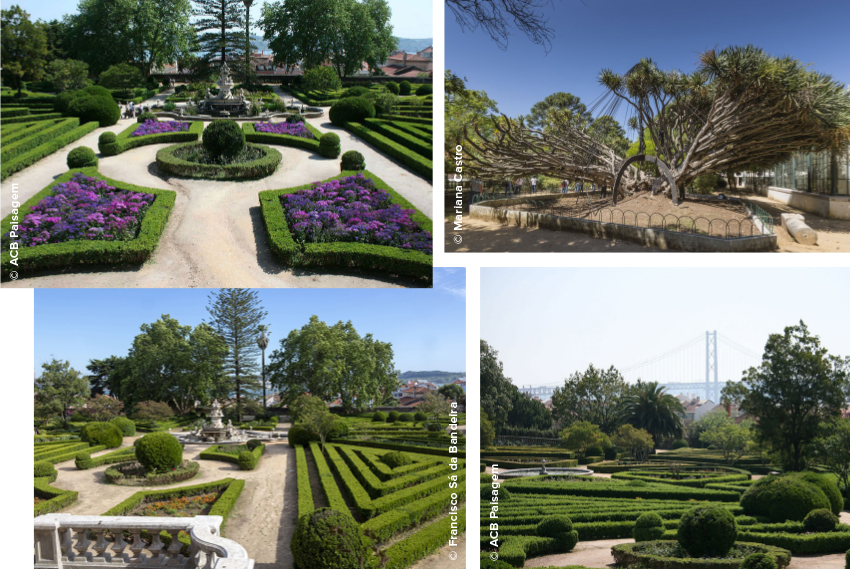
The preparation of the restoration project was an initiative of the Board of Directors of the Higher Institute of Agronomy (ISA), chaired by Eng. Francisco Castro Rego and advised by professors João Pedro Bengala Freire, Fernanda Cabral, and Cristina Castel-Branco. Approved in 1993 and carried out between ’94 and ’97, the recovery project for the Ajuda Botanical Garden essentially aimed to prepare the garden, as a privileged green space in Lisbon, to welcome both national and foreign visitors. On the other hand, one of the objectives of this restoration was to guarantee its botanical origin while also allowing for non-scientific enjoyment, making it necessary to offer the garden as a well-prepared leisure space for the public, overlooking the Tagus River. Part of the recovery project included the creation of the Garden of Aromas, specially designed for the blind. Its Braille signs and plants displayed in raised beds allow visitors not only to identify the species but also to touch and smell them.
The Ajuda Botanical Garden is home to the oldest dragon tree in Lisbon, transplanted to the garden in 1768 when it was already an adult. Today, it is considered a symbol of the garden and holds high historical and botanical value.
Address Calçada da Ajuda s/n, 1300-011 Lisbon, Portugal
Contact +351 213 622 503
- Amália Rodrigues Garden
“Man dreams, and the work is born.” It was precisely around April 25, 1974, that architect Ribeiro Telles began working on a long-held dream: the creation of a green corridor in Lisbon for pedestrians and cyclists—complemented with recreational spaces—keeping in mind the needs of 21st-century Lisbon. A dream that began to take shape when the Alto do Parque Garden was completed in 1996, which was renamed in 2000 to honor the fado singer Amália Rodrigues. The garden is like a puzzle piece that together forms the Green Corridor—which in turn is part of the Ecological Structure of the Lisbon Metropolitan Area—integrated into a new concept of urbanism, replacing the romantic or neoclassical concepts so popular in earlier decades.
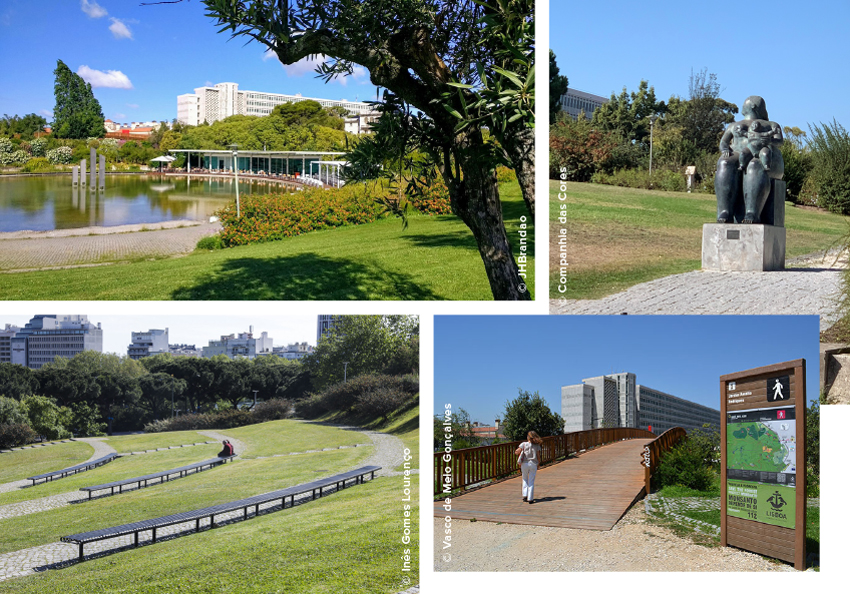
Those who walk through and decide to explore what lies beyond Eduardo VII Park will find a garden of singular beauty. Its location on the southern slope of the ridge that borders Eduardo VII Park gives it a unique panoramic view. It is possible to discover the city from two perspectives: the Baixa Pombalina, St. George’s Castle, and S. Pedro de Alcântara, and further away, the Arrábida Mountains and the Palmela Castle hill.
Near this area, a hill rises—the highest point of the garden—aligned with St. George’s Castle and Palmela Castle, offering a magnificent view of the Tagus through the Avenida da Liberdade valley. On the north side of the garden, there is another hill facing the plateau part of the city, the “Hill of Secrets,” where you can admire the city designed by Ressano Garcia and see the Brandoa mountains.
Located within the Amália Rodrigues Garden is Linha d’água, a space with a terrace by the lake that serves light meals and offers a panoramic view of the Tagus River. On Father’s Day, this could be the choice for a family meal in a quiet and pleasant atmosphere.
The garden’s lawn is reserved for free sports areas, while the length of the paths allows for a walk with constant interesting alternatives. Conditions for a healthy environment are also created. In turn, strips of grasses identical to those that appear golden on roadsides delimit the area between the clearing and the woods. An overpass for pedestrians and bicycles connects the Amália Rodrigues Garden to the meadow of the Palace of Justice, continuing all the way to Monsanto.
The Monsanto Green Corridor is a project designed with the city’s future in mind, as Lisbon moves toward an increasingly dry artificial environment due to the high density of buildings and impermeable surfaces. The corridor, which starts at Restauradores, extends through Av. da Liberdade, Eduardo VII Park, Alto do Parque, the Palace of Justice meadow, the Games Gardens (between Bairro Azul and Campolide University), and the Campolide Gardens, entering Monsanto through the Forest Park Reception Center—it presents itself as a continuous structure integrating various urban green spaces where residents can find a recreational area that contributes to improving their quality of life.
Address Alameda Cardeal Cerejeira, 1070-051 Lisbon
Contact +351 915 225 592
© Companhia das Cores for Horto do Campo Grande