
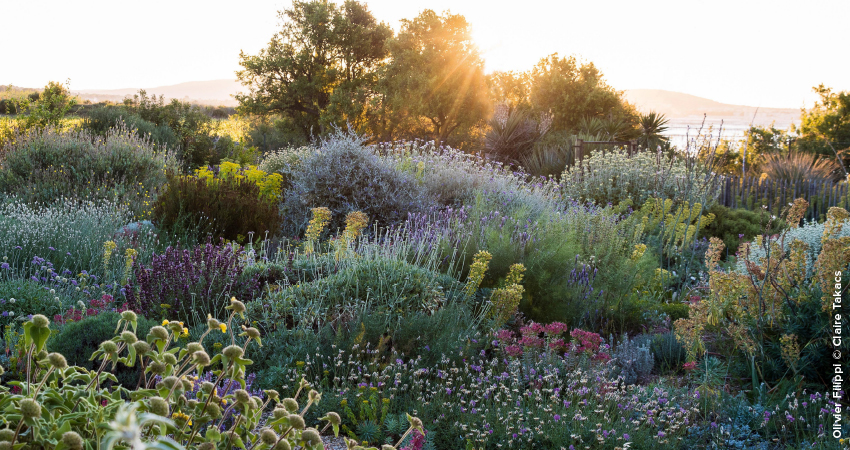
With their unique beauty, they are increasingly in demand, meeting countless needs and inviting socialising and relaxation. This is the essence of Mediterranean Gardens. A mega-trend that has already reached terraces, balconies, and private gardens, and could be about to arrive at your home. Find out how. We’ll tell you all about it!
What are Mediterranean Gardens?
Originating from the sunny coastal regions bordering the Mediterranean Sea, these gardens are the hallmark of a simple and relaxed lifestyle. In these parts, nature expresses itself in a very genuine way; colours vibrate, contrasting with white walls, stone walls, and gravel paths; different textures blend with the soft scents of plants, which coexist with decorative details like terracotta pots and basketry, which are never left to chance.
These gardens often merge with picturesque villages, coastal landscapes, vineyards, and whitewashed houses, with the blue of the sea peeking through in the background. Striking features of Southern Europe that can be found in Portugal, Spain, Italy, Greece, or France.
What kind of plants can I have in my Mediterranean Garden?
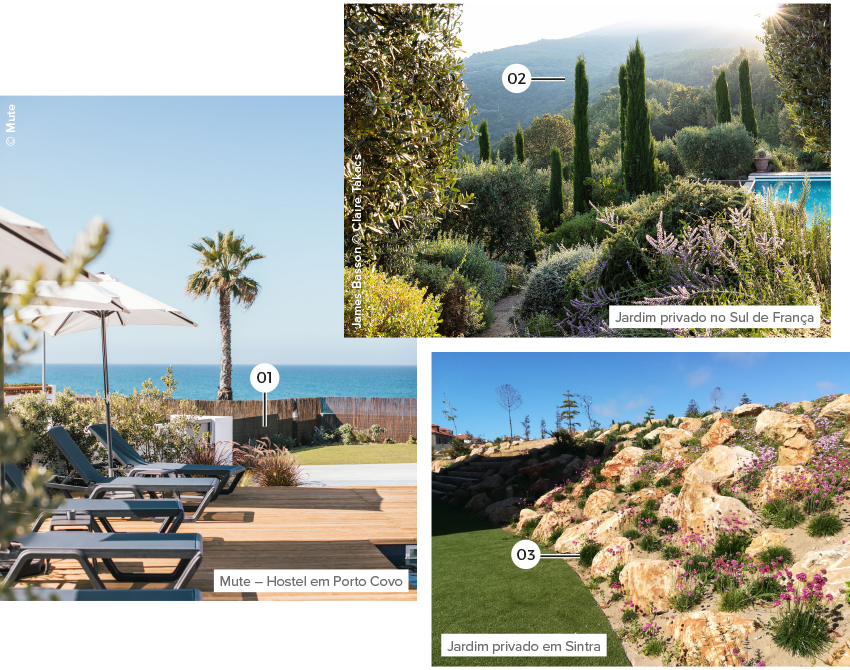
What sets these gardens apart are the plants adapted to the hot, dry climate, native to Southern European regions. The options are varied. Here are some possibilities:
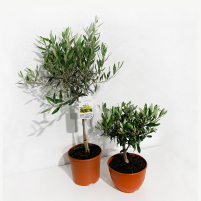
- Olive trees: with their twisted trunks and silvery leaves, they add an imposing touch to the environment;
- Cypresses: uncommon in Portugal, but in Italy, these coniferous trees line paths or properties with their straight trunks and dense foliage, providing elegance and privacy to the landscape;
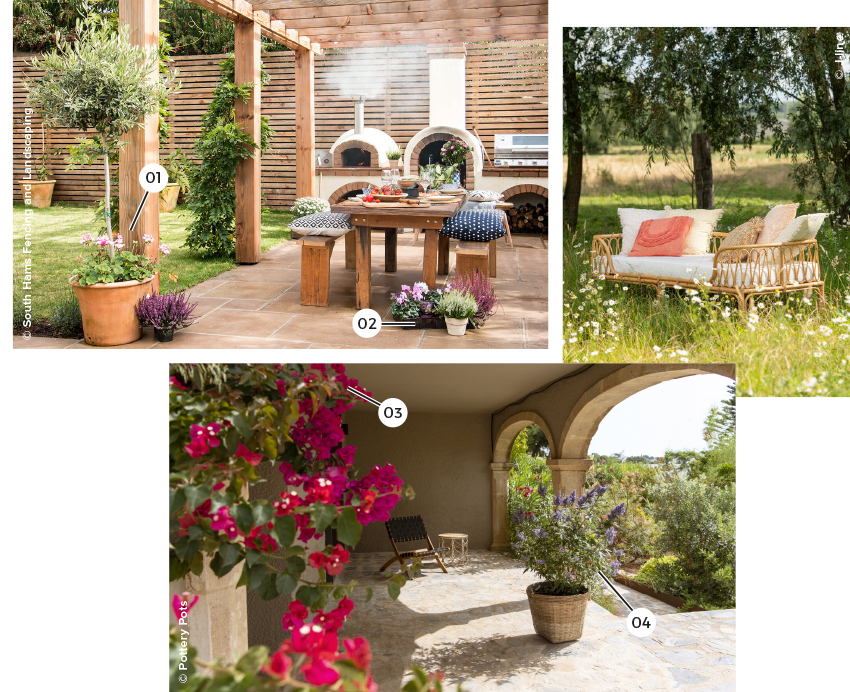
- Bougainvilleas: climbers with intense, vibrant colours that decorate walls and turn them into true works of art;
- Lavender: with its purple flowers and soft scent, it adds lightness to the space;
- Rosemary and thyme: aromatic herbs that offer truly Mediterranean scents and flavours…
…and many other species, such as lavender, fig trees, or mastic trees, that can be added.
Which decorative elements can I choose?
Simplicity is key when decorating your garden. Less is more. Natural elements like stones or terracotta-toned gravel are excellent options for creating walls or winding paths. Rustic wooden furniture, colourful cushions, tiles, terracotta pots, or lanterns are details that can make the space more welcoming. If you wish, you can also create a water fountain, a small pond, or a stream, which with its characteristic sound refreshes, calms, and transports us to Mediterranean landscapes.
Where are they most common?
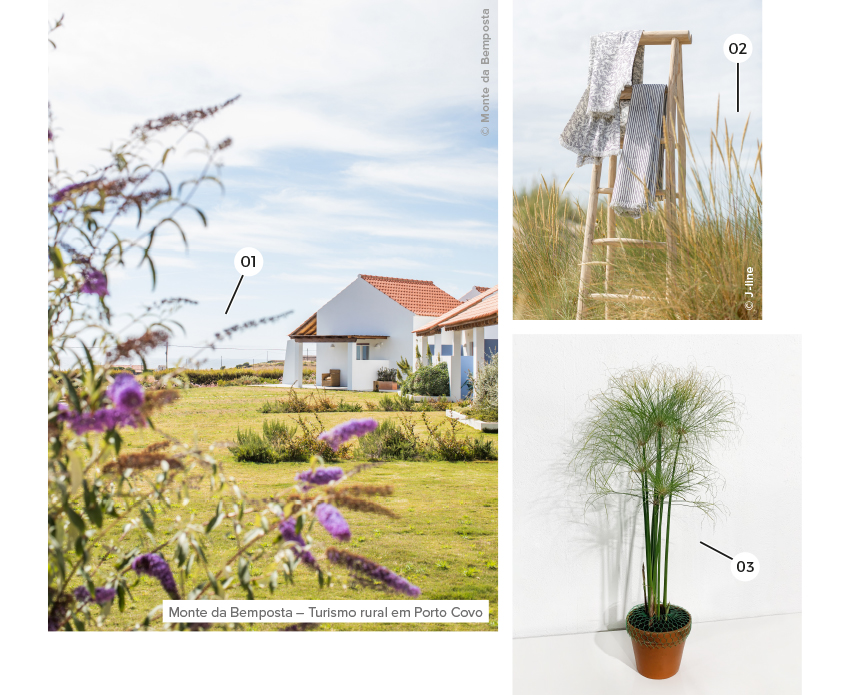
Although this style is versatile and adapts to different climates and altitudes, it is in the Algarve and Comporta that more spaces with Mediterranean influence stand out, as the proximity to the Mediterranean and the mild climate provide the ideal conditions for maintaining these gardens.
Why create one?
The beauty of these gardens could be reason enough to want to create your own. However, there are multiple advantages for you and the environment. The colours and scents promote a sense of well-being, and the space invites the practice of meditation. But there’s more. These gardens are ecologically conscious. The species associated with this concept are adapted to dry climates, therefore requiring less water and maintenance than conventional gardens. In this way, water resources are conserved. This concept also attracts pollinating insects and birds, contributing to the preservation of biodiversity.
IMPORTANT NOTE!
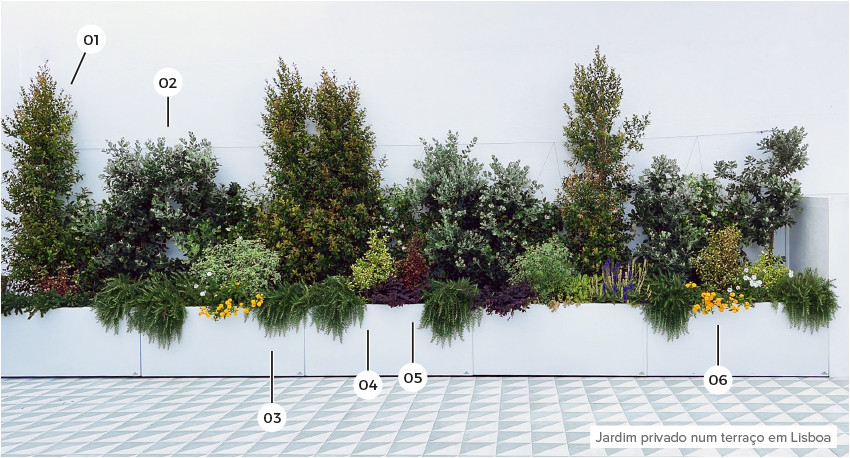
Although these gardens require less water and are an excellent option given today’s climate challenges, it is important to keep in mind the need for an efficient irrigation system for your space to avoid water loss or leaks.
Next steps
- Close your eyes;
- Imagine yourself in your future Mediterranean garden;
- Check out the inspirations we have for you on our social media;
- Ask our consultants for help via email at info@hortodocampogrande.com;
- Browse our website and add all the elements you imagined in step 2 to your cart;
- Receive all the items you ordered at home and create your space;
- Wait until the garden meets all your requirements;
- Invite your friends for the opening;
- Enjoy your Mediterranean garden.
Algarve Plants
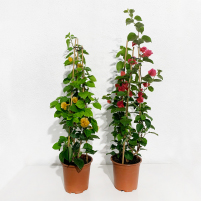
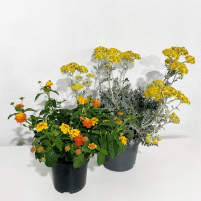
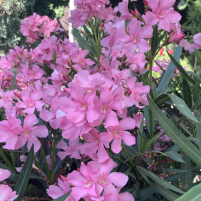
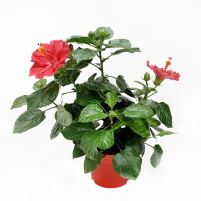
Plants that do well in the sandier soils of Comporta
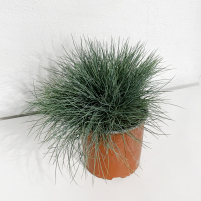
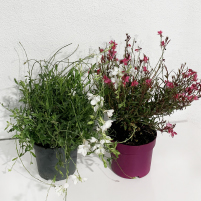
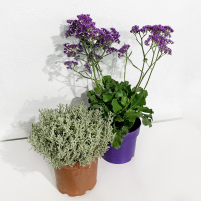
© Companhia das Cores for Horto do Campo Grande