




Nestlé Campus
A space that balances work and experiences
Quality of life and the concept of care as fundamental pillars of Nestlé’s purpose were the guiding thread of the headquarters building renovation project, which transformed the workplace into a more flexible, collaborative, and sustainable space. Horto do Campo Grande was part of this project in which interaction with nature was always prioritized, in the selection and implementation of the most suitable plants for interior spaces.
Based on the concept of the Nest, the brand’s representative symbol, Openbook, the studio responsible for the project, developed the new space in which three distinct centres stand out: the “Landing Zones”, the “Social” and the “Workplace”.
All the zones have in common the fact that they are an environment in which plants stand out and where interaction with nature is the key element.
Interior
A space inspired by nature
At the new Nestlé Campus, interaction with nature is an essential element. Bringing greenery into indoor environments is one of the ways to integrate construction with natural space. Plants, in addition to bringing beauty, help purify the air and generate greater thermal comfort for users. This is what the Openbook project brought to the new Nestlé Campus in general, and particularly to the interior areas where Horto do Campo Grande was involved.
Following Openbook’s choice for the location of the planters and plants, Horto do Campo Grande proposed a selection of species that would best adapt to the different environments on the various floors of the building.
The selection was made based on the solar orientation of the different spaces, the presence of natural light, and its intensity. Low-maintenance plants such as Scindapsus aureus and Chamaedorea elegans, which allow watering to be done in smaller quantities and less frequently. Species less prone to pests and diseases and with air-purifying characteristics—such as Spathiphyllum—Peace Lily, which conveys a sense of tranquility to any place where it is found.
The aesthetic and functional aspect was also an important point to take into consideration when selecting the plants, always opting for those that visually worked best in each location; and also depending on the goal, to create visual barriers or just for contemplation and decoration, for which size and volume were taken into account.
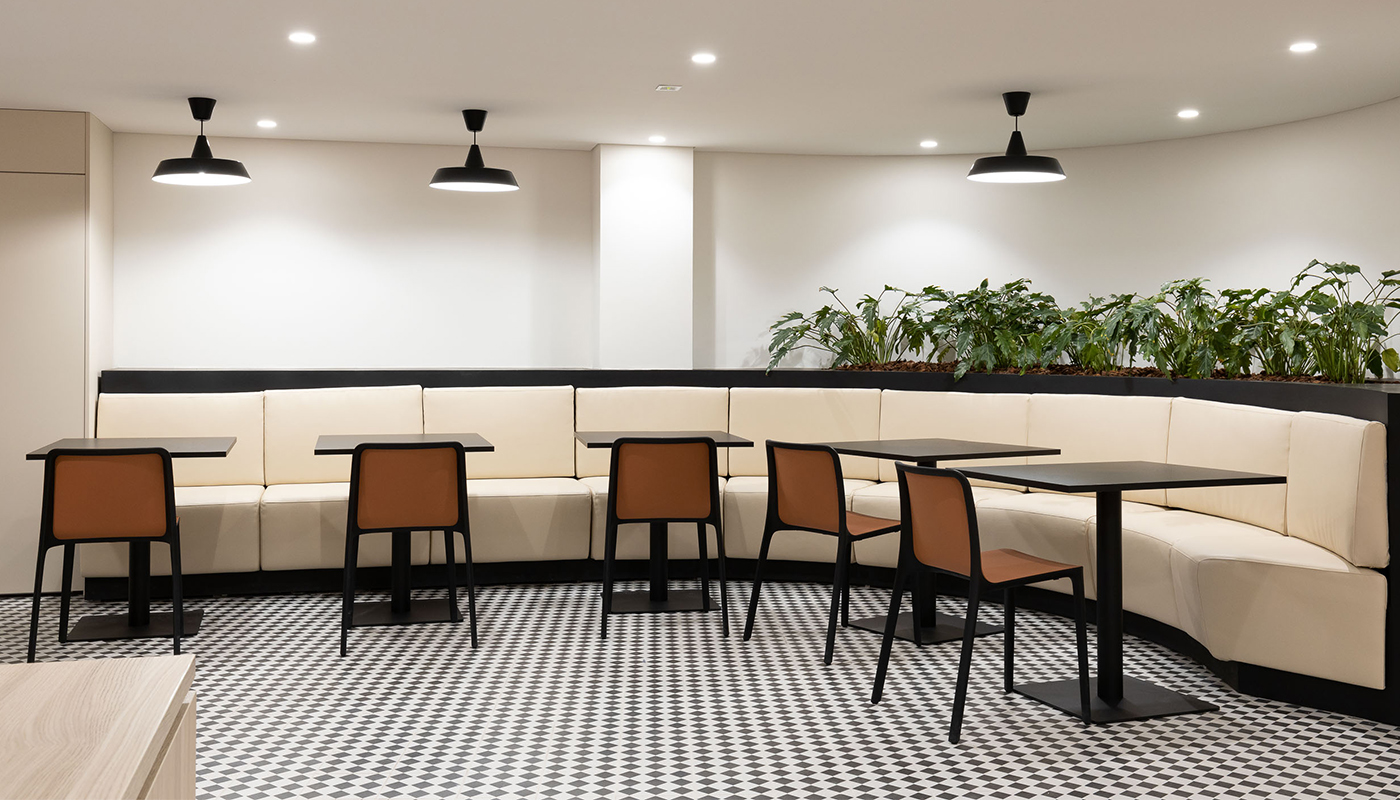
Thus, in the lobby/reception, large plants with lush green foliage in different shades were chosen. Strelitzia Nicolai, with large leaves similar to those of the banana tree, which stand out in any space, combined with Monstera Deliciosa, also known as Swiss Cheese Plant, which is a trend in decoration and conveys a sense of tropicality. In the areas called “Anchor points and Agile,” air-purifying plants were chosen, and in the “Lunch areas,” medium-sized plants such as Zamioculcas zamiifolia and Philodendron xanadu. Finally, in the “landing areas” more exposed to the sun, Strelitzia Nicolai, Dypsis Lutescens, and Croton Petra were chosen.
Ficha Técnica
Get inspired with us, receive our Newsletter