

Native to warm lands, from Sierra Leone to Cameroon, the Ficus Lyrata belongs to the fig family and is, without a doubt, a plant that fits perfectly into contemporary and minimalist interior decor, where its presence will stand out.
Common names: Fiddle-leaf fig, Ficus-lira, Ficus Lyrata
Family: Moraceae
Origin: Africa, Cameroon, Sierra Leone
Famous for its lyre-shaped leaves, the Ficus Lyrata is also known as the “Fiddle-leaf fig”. The name lyrata comes from the resemblance of its leaves—dark green, shiny, with a leather-like texture—to the classic musical instrument, the lyre.
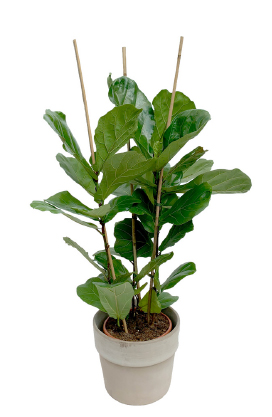
Ficus Lyrata
in a clay pot

Ficus Lyrata
(approx. 1-1.5m tall)
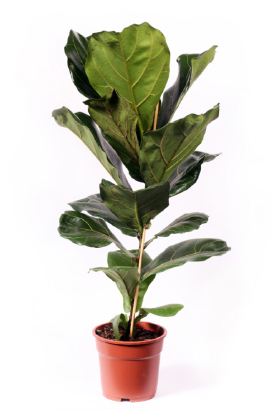
Ficus Lyrata
It is an outdoor plant that has increasingly been brought indoors, where it takes center stage alongside other plants. In its natural habitat, this plant can reach 10 meters in height; however, in a pot, it reaches a maximum of 3 to 4 meters. As an indoor plant, its growth tends to be slower and its foliage more sparse, but very decorative.
It is quite hardy and adapts to less-than-perfect environments and conditions. However, don’t get complacent… it needs some care and, above all, time to acclimatize. It suffers when its environment is changed. So, get advice on the best place to put it, whether in your living room, bedroom, hallway, or office.
Besides being very decorative, the Ficus Lyrata is known for its ability to absorb and block noise pollution, purify the air, and filter toxins.


Main Features


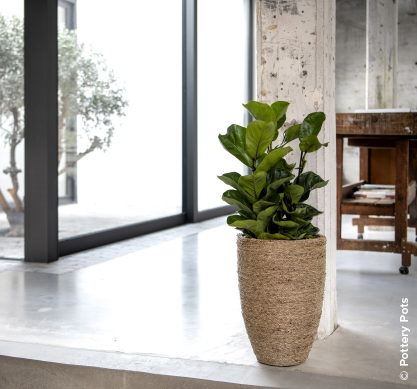


How to care for it
The Ficus Lyrata is the ideal plant for plant lovers with some experience or for adventurers who want to start their own “urban jungle” at home. But keep in mind that it needs some care for its glossy leaves to stay beautiful.
Light: This is one of the most important aspects of care for keeping Ficus Lyrata leaves beautiful and healthy. This plant prefers plenty of indirect (or filtered) light. But it can tolerate a few hours of direct sunlight, as long as it is always away from the window so as not to burn its leaves.
Tip: Rotate about 90º every week to expose all sides of the plant to light.
To keep the tree at a size suitable for indoor environments, prune the top.
Watering: Accustomed to a tropical climate, it’s important for the Ficus Lyrata to have moist soil, but not overly so. The best way to know if it’s time to water is to stick your finger 2-3cm deep into the soil to see if it feels moist. In the warmer months, this plant loves having its leaves misted.
Temperature: As a beauty from warm lands, it loves temperatures between 20-28ºC. But be careful, high temperatures can cause brown spots on the foliage and/or even leaf drop. If you notice your plant starting to drop a lot of leaves or if its huge, shiny leaves begin to look dull and spotted, move it away from dehumidifiers or heaters.
Substrate: On this point, the Ficus Lyrata is not very demanding. A universal substrate will have the necessary nutrients for this plant.
Caution: If ingested, the Ficus Lyrata is considered TOXIC to animals.
Did you know…
The Ficus Lyrata produces a fruit similar to a fig, but it is not edible?
For those who love Ficus Lyrata but don’t have an environment conducive
to its growth, you can opt for an artificial one
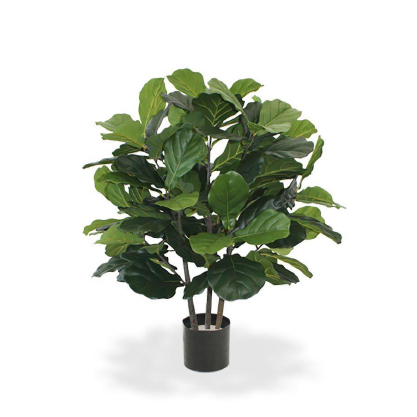

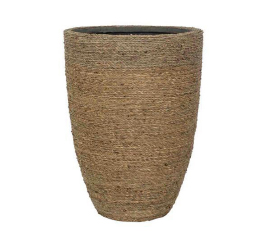
Pot suggestions for your Ficus Lyrata


© Horto do Campo Grande