
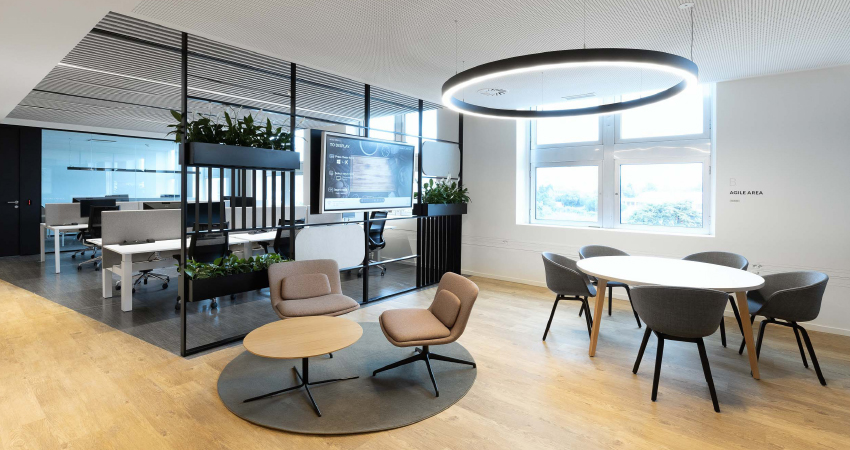
Quality of life and the concept of caring as fundamental pillars of Nestlé‘s purpose were the guiding thread of the headquarters building renovation project, which transformed the workplace into a more flexible, more collaborative and more sustainable space. Horto do Campo Grande was part of this project in which interaction with nature was always prioritized, in the selectionand implementation of the most suitable plants for the interior spaces.
Present in Portugal since 1923, Nestlé, one of the most recognized companies worldwide in the food sector, as a way to maintain its commitment to safety, health and well-being in the workplace, decided to renovate its headquarters building, located in Lisbon. The new headquarters is now, more than a “green” building, with the lowest possible environmental impact, that fosters more agile, digital, flexible and collaborative ways of working, a building with a strong cultural dimension based on the company’s values and principles, placing the well-being and personal and professional fulfillment of its employees at the center of this change.


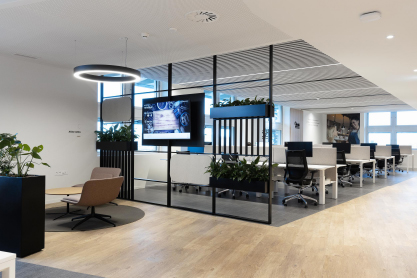

A space of balance between work and experience
Alexis Pinheiro, Workplace Solutions Manager at Nestlé, explains that “it is proven that the workspace has a direct influence on employee performance”. Therefore, for Nestlé it was essential that, more than an office, its headquarters building be a place where there is a balance between work and experience, an inclusive space with unique characteristics that motivates employees to achieve their personal goals and those of the company.
Based on the concept of the Nest, the brand’s representative symbol, Openbook, the studio responsible for the project, developed the new space in which three distinct centres stand out: the “Landing Zones”, the “Social” and the “Workplace”.
“The first zone is a place for informal meetings, for working alone or in a team. It is an extension of the outdoors, bringing nature inside and offering a unique atmosphere and experience“, says Paulo Jervell, architect at Openbook. “In the workspace zone, informal collaborative work bubbles were strategically placed, which were named “Agile Areas”. All zones have in common the fact that they are an environment where plants stand out and where interaction with nature is the primary element“, he adds. For the exterior, the implementation of a leisure area with a pergola for an inviting atmosphere, a pedestrian circuit for employees to exercise and also an organic vegetable garden for agricultural experiments is also planned.
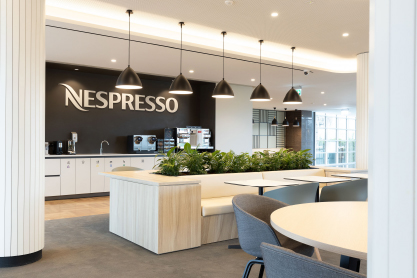

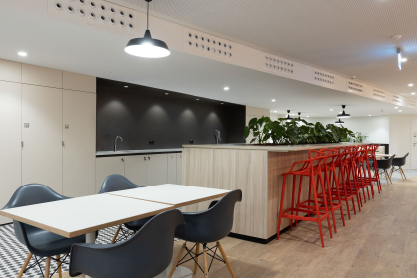
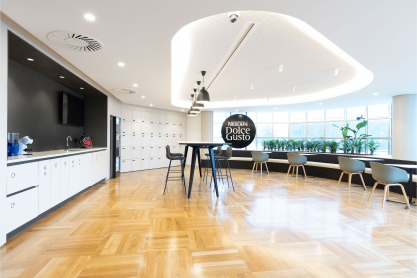
A space inspired by nature
In the new Nestlé Campus, interaction with nature is an essential element, as defined by Biophilic design (http://hortodocampogrande.pt/jardim/design-biofilico-ambientes-urbanos-inspirados-pela-natureza/). Bringing greenery into environments is one of the ways to integrate construction with natural space. Plants, in addition to bringing beauty, help purify the air and generate greater thermal comfort for users. This was all that the Openbook project brought to the new Nestlé Campus, in general, and particularly to the interior zone where Horto do Campo Grande was involved.
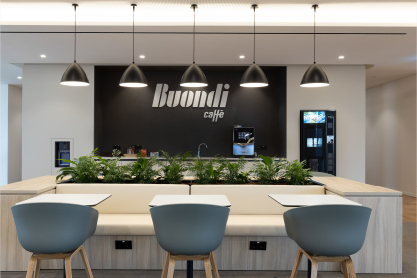
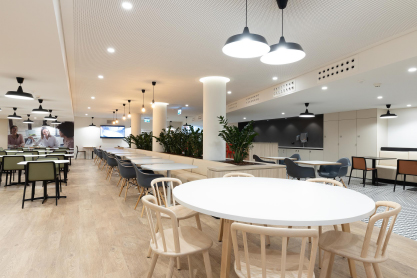


Horto do Campo Grande’s proposals
Following Openbook’s choice for the location of the planters and plants, Horto do Campo Grande proposed a selection of species that would best adapt to the different environments on the various floors of the building.
The selection was made according to the solar orientation of the different spaces, the existence of natural light and its intensity. Plants with low maintenance needs such as Scindapsus aureus and Chamaedorea elegans, which allow watering to be done in smaller quantities and less frequently. Species less prone to pests and diseases and with air-purifying characteristics – such as Spathiphyllum – Peace Lily, which conveys a sense of tranquility to any place where it is found.
The aesthetic and functional aspect was also an important point to take into consideration when selecting the plants, always opting for those that visually worked best in each location; and also depending on the goal, to create visual barriers or just for contemplation and decoration, for which size and volume were taken into account.
Thus, in the lobby/reception, large plants with exuberant green foliage in different shades were chosen. Strelitzias Nicolai, with large leaves, similar to those of the banana tree, which stand out in any space, combined with Monsteras Deliciosas, also known as Swiss Cheese Plant, which are a trend in decoration and convey an idea of tropicality. In the zones called “Anchor points and Agile”, air-purifying plants were chosen and in the “Lunch areas”, medium-sized plants such as Zamioculca zamifolia and Philodendron xanadu. Finally, in the “landing areas” more exposed to the sun, Strelitzia Nicolai, Dypsis Lutescens and Croton Petra were chosen.
All the plants that existed in the building were reused and integrated into the new project.
Discover the plants in this project
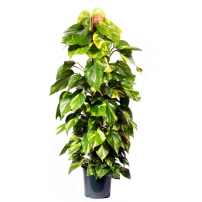
Scindapsus Aureus

Chamaedorea Elegans

Spathiphyllum – Peace Lily

Strelitzia Nicolai
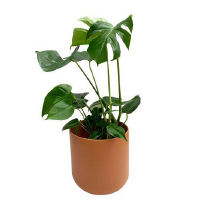
Monstera Deliciosa
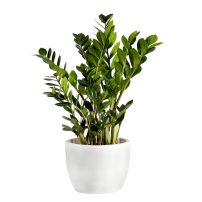
Zamioculca zamifolia

Philodendron Xanadu

Areca – Palm (Dypsis Lutescens)

Croton Petra

Schefflera