



MARTINHAL RESIDENCES:
THE CHALLENGES OF SPECIALIST MAINTENANCE
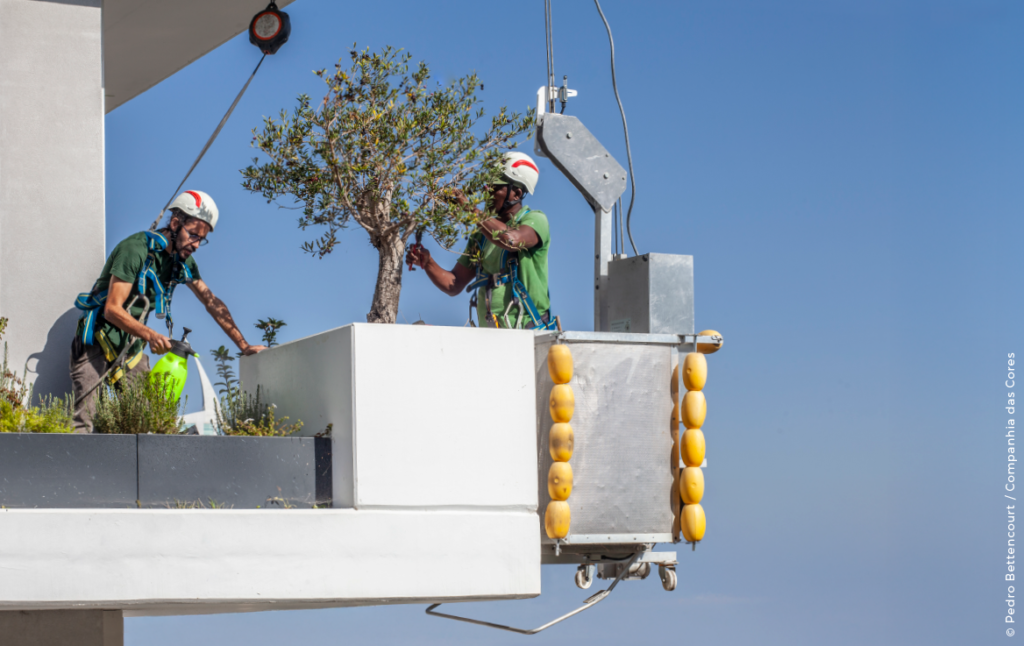
Martinhal Residences, located in Parque das Nações, Lisbon, is an example of sophistication and luxury, with a harmonious connection to nature. This residential development, designed by award-winning architect Eduardo Capinha Lopes, features a landscaping project developed by the studio Ceregeiro – Arquitectura Paisagista, Lda. Horto do Campo Grande was responsible for carrying out this landscaping project, ensuring the implementation of green solutions that align with the environmental requirements and the building’s contemporary design, while preserving the development’s ecological essence.
Horto do Campo Grande currently also ensures the maintenance of the space, both the development’s common areas and the vegetation on the apartments’ balconies. It’s demanding maintenance that requires special care, as the development includes an aparthotel area with a high level of use, and because maintaining the vegetation on the development’s balconies is done in an unconventional way.
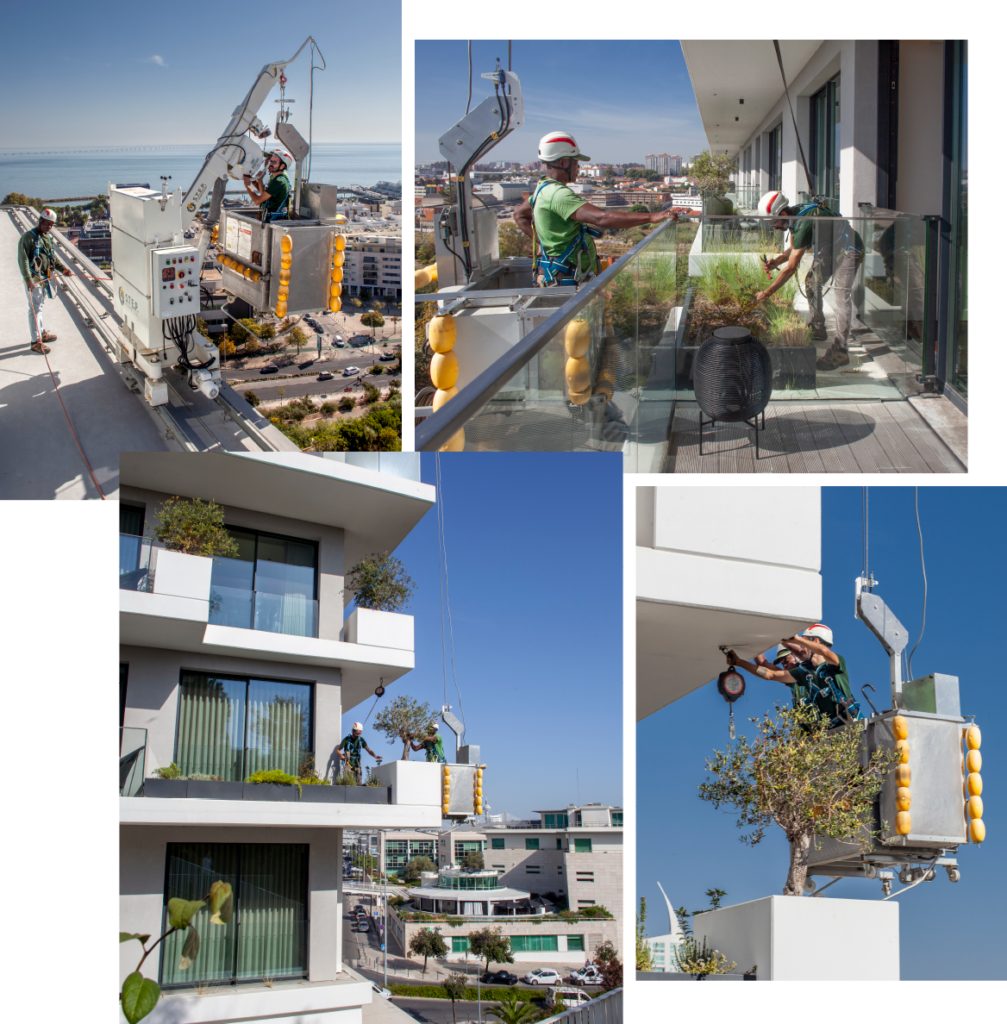
To keep the plants in good condition without compromising the privacy of users in the different apartments, maintenance of the balcony planters is carried out using a suspended cradle—an innovative technique that allows plant maintenance to be done from the outside of the building, while suspended.
Patrícia Brizida, Head of the Horto do Campo Grande Outdoor Maintenance Department, and Inês Antunes, the account manager, share with us the main challenges of this project.
Keeping the plants on the balconies without compromising residents’ privacy is a demanding task. How is maintenance carried out in these areas to maintain residents’ privacy? What special care is taken?
As Patrícia Brizida explains, there is daily coordination with the building management team to define the façades and floors where maintenance will be carried out. Residents are informed about the routine required to preserve the planters. Whenever there is any impediment (more common on floors managed under a hotel regime), the team is informed in advance not to intervene on those balconies, ensuring full respect for users’ privacy.
Working at height involves a job with high physical and technical demands. How does the Horto do Campo Grande team prepare for the difficulties involved in this type of maintenance? What specific procedures are followed?
Working at height requires a high level of technical and physical preparation, so the HCG team is carefully selected and trained to meet these challenges. The staff assigned to this intervention have specific training in working at height, ensuring they know and apply all safety standards associated with this type of operation. In addition, staff received specialised training in using the suspended cradle, provided by the company responsible for its installation, ensuring correct handling of the equipment.
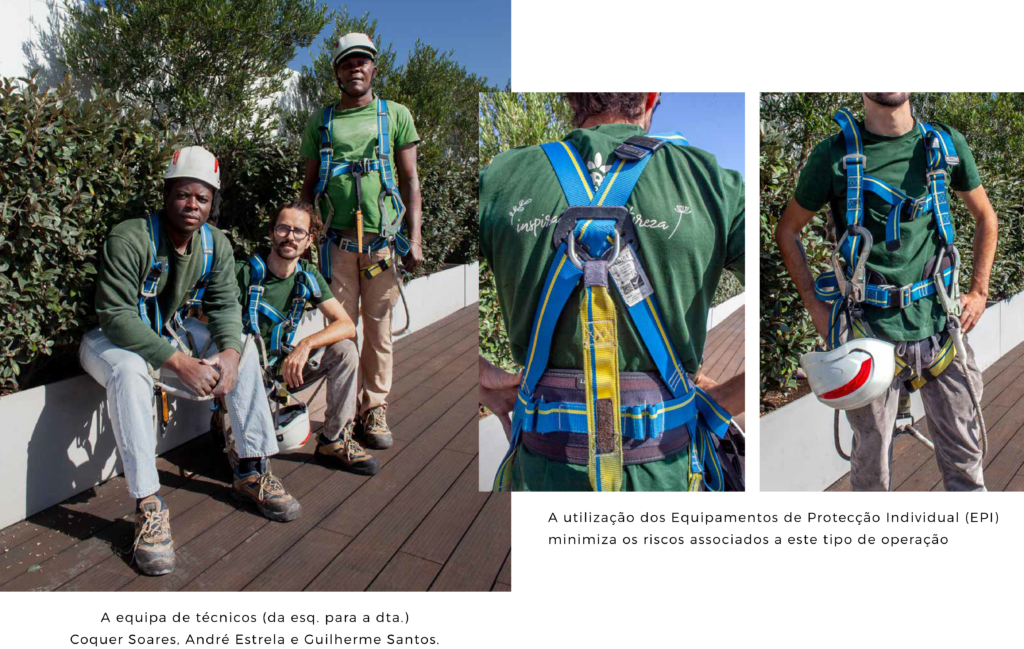
“During all interventions, the current legal and safety procedures are followed. Technicians use the appropriate Personal Protective Equipment (PPE) (harness, helmet, fall-arrest systems and other devices), minimising the risks associated with this type of operation,” says the Landscape Architect. Landscape Architect Inês Antunes, who leads the HCG maintenance team.
What are the biggest challenges the team faces, namely with adverse weather conditions, etc.?
Work carried out at height requires constant monitoring of weather conditions. Therefore, the suspended cradle is never used under any circumstances when adverse weather conditions occur, such as strong wind, rain, or other situations that could compromise the stability and safety of the operation.
It is also worth noting that the cradle itself is equipped with an anemometer which, from a certain wind speed, issues an alert indicating the need to retract the equipment and immediately suspend maintenance work. This system works as an additional preventive alert, allowing the team to act in time and reduce any associated risk.
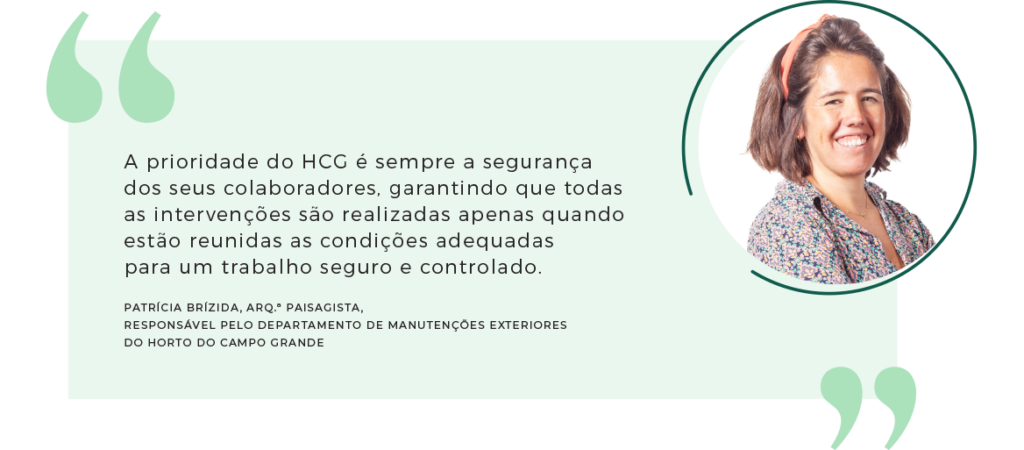
“In this way, HCG’s priority is always the safety of its staff, ensuring that all interventions are carried out only when the right conditions are in place for safe, controlled work,” shares Landscape Architect Patrícia Brízida.
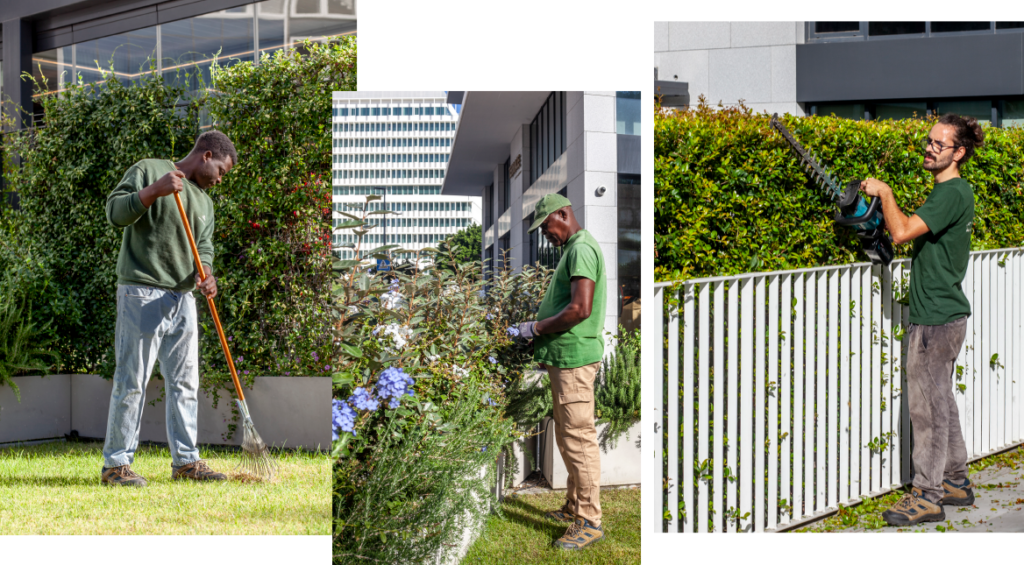
What are the main logistical challenges when carrying out maintenance in the common areas of a development with these characteristics, namely lawns and hedges, many of them located in areas frequented by guests and residents throughout the day during breaks and leisure time? How does the team manage to reconcile the work without compromising the customer experience and well-being?
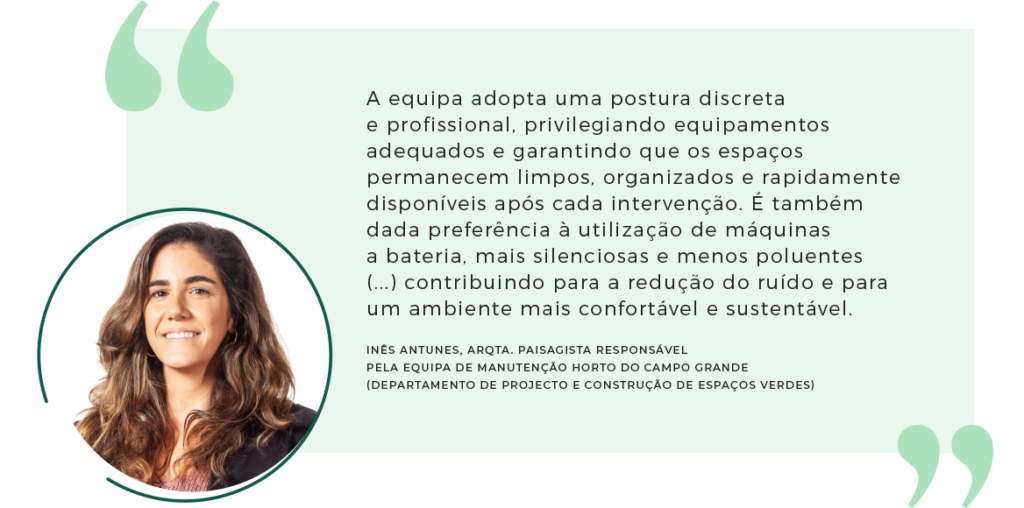
The team adopts a discreet and professional approach, prioritising suitable equipment and ensuring that spaces remain clean, organised, and quickly available after each intervention. Preference is also given to using battery-powered machines, which are quieter and less polluting than combustion equipment, helping to reduce noise and create a more comfortable and sustainable environment.
Coordination with the development’s management is also essential, making it possible to anticipate specific needs and adjust planning accordingly.
In short, although it is a demanding process, the priority is to find the balance between efficient execution of maintenance tasks and preserving a calm, comfortable environment for all users, ensuring that the quality of the spaces matches the level of excellence expected in a development with these characteristics.
Photographs © Pedro Bettencourt / Companhia das Cores
Get inspired with us, receive our Newsletter