



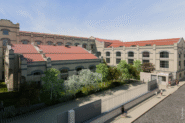
Lisboan International School
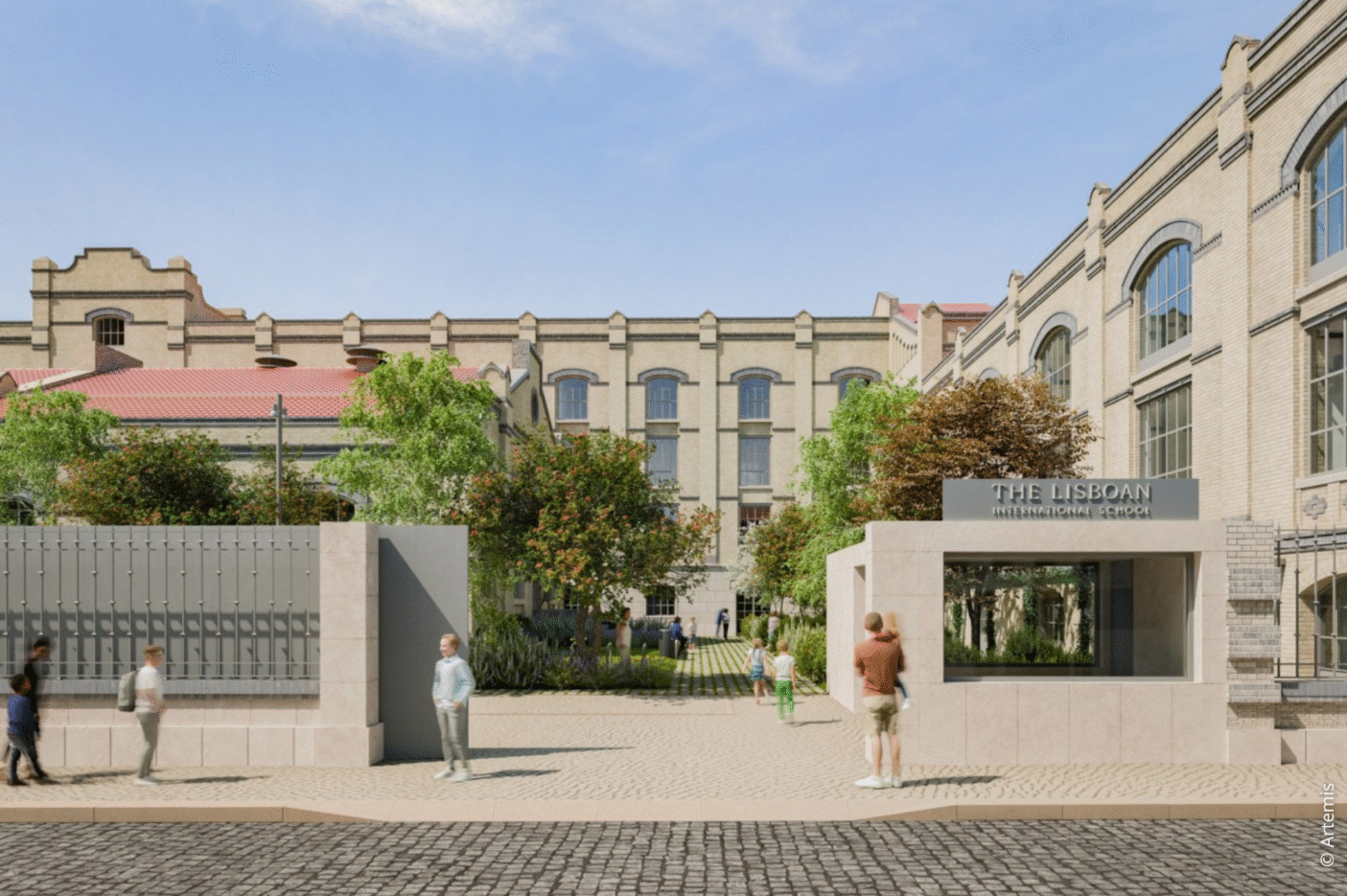
In Alcântara, Lisbon, the historic building of the former “A Napolitana” pasta factory gained a new identity with the arrival of Lisboan International School (LIS): an educational complex that combines heritage, architecture, and sustainability. The project, designed by architect Frederico Valsassina, preserves the original facades of the industrial complex and proposes a contemporary and functional conversion, adapted to the needs of an international school.
Horto do Campo Grande was responsible for executing the landscape design project, developed by Proap – Landscape Architecture Studies and Projects, an intervention that emphasizes harmony between memory and future, reinforcing the educational and ecological vocation of this new educational space.
A rehabilitation project with history
Classified as a monument of public interest, the former “A Napolitana” factory complex was transformed into a learning space open to the city, keeping its industrial identity alive. The project by Frederico Valsassina Arquitectos, recognized for its sensitivity in rehabilitating historic buildings, gives Lisbon’s industrial heritage a contemporary function, where education, architecture, and nature coexist in the same space.
Functional, sustainable, and educational landscaping
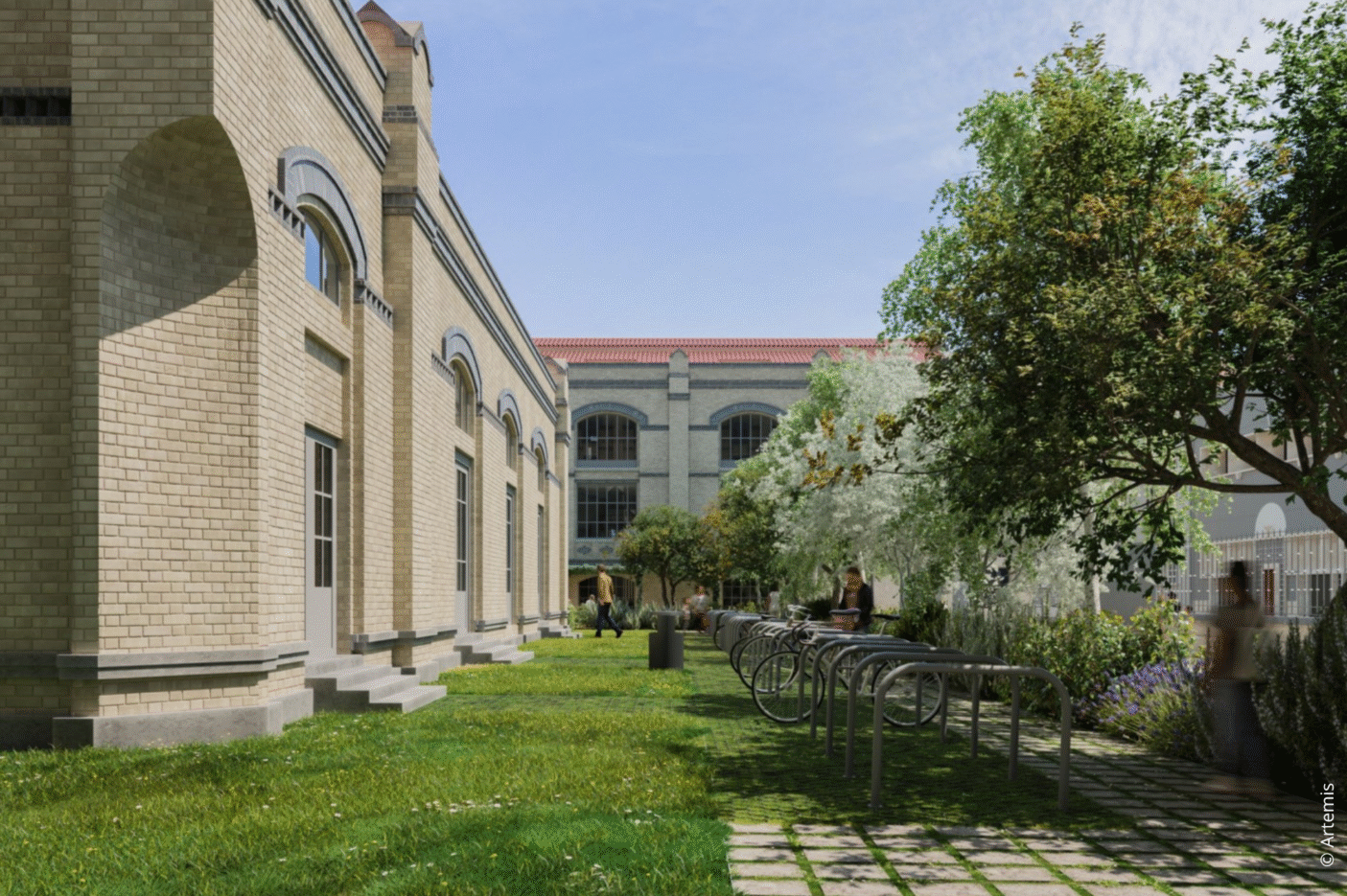
The landscape intervention, designed by Proap, was executed by Horto do Campo Grande with a focus on functionality, sustainability, and ecological integration. The design emphasizes the creation of pedestrian pathways, recreational areas, and shaded zones, ensuring balance between leisure spaces and outdoor learning areas. The botanical selection focused on native species with low water requirements, adapted to the Mediterranean climate, ensuring resilience, biodiversity, and reduced maintenance.
The outdoor areas were structured with vegetation that defines smooth transitions between courtyards, gardens, and circulation zones, promoting soil permeability and integration with the existing architecture. This project reflects the BREEAM philosophy, favoring solutions that reduce environmental impact and promote the well-being of the school community.
Technical solutions for sustainability
The technical component of the landscape project was designed to ensure efficient use of natural resources. The pressurized automatic irrigation system, equipped with rain sensors, flow meters, and precision emitters, ensures intelligent water management tailored to the specific needs of each green area. Water is distributed through sprinklers and drip irrigation, avoiding waste and ensuring the longevity of planted species.
For outdoor paving, permeable materials and green joints were chosen, promoting natural water infiltration and contributing to combating urban impermeabilization. These solutions, combined with the use of native vegetation, reduce heat islands, increase water retention, and reinforce the environmental balance of the complex.
Learn more about this project by reading the full article here.
Ficha Técnica
Get inspired with us, receive our Newsletter