





Pestana Tróia Eco-Resort & Residence
Located on the Tróia Peninsula, between the Atlantic and Serra da Arrábida, Pestana Tróia Eco-Resort & Residence is a unique example of harmony between architecture and nature. With a total area of 120 hectares, three exclusive beach accesses, and more than 360 villas and apartments, the development integrates seamlessly into a protected natural landscape, where comfort, sustainability, and simplicity coexist with native vegetation and the tranquility of the surroundings.
It was in this exceptional setting that Horto do Campo Grande was invited to collaborate on the refurbishment of the outdoor space of one of the resort’s residential plots, based on the landscape design developed by architect David Flores from Atelier Biodesign. The goal was to revitalize the garden and strengthen the connection between the living space and the natural environment, respecting the ecological characteristics of the region and favoring sustainable and integrated solutions.
A garden designed for the place
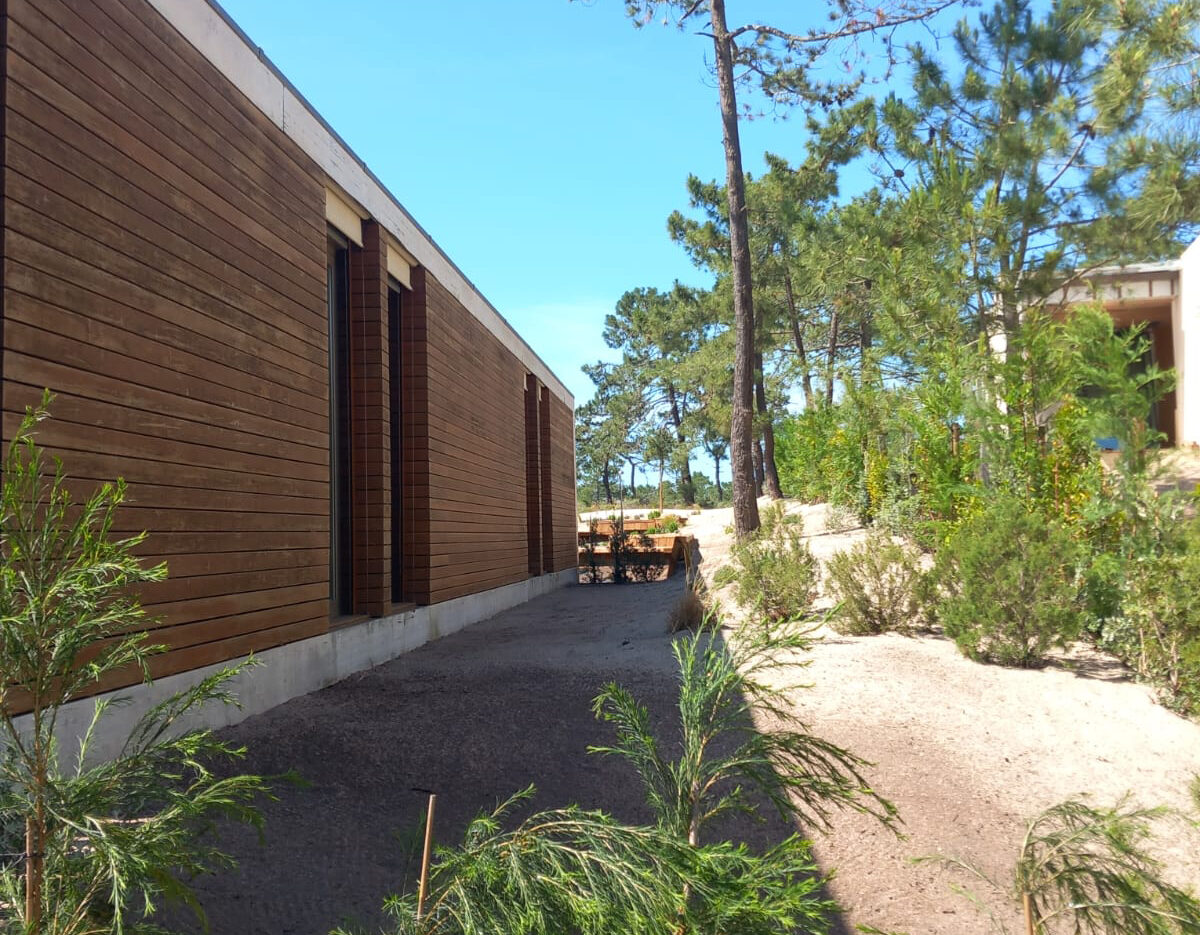
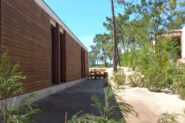
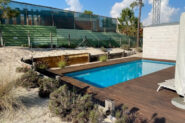
The project arose from the need to create a green structure that would blend with the surrounding landscape, enhancing the functionality of the space and its relationship with the architecture. The design defined distinct areas, such as the entrance courtyard, pedestrian pathways, recreation clearing, chill-out zone, and pool deck, designed to offer shade, privacy, and comfort.
The organization of pathways and visual frames was conceived intuitively, to allow a natural and fluid experience of the garden. The result is a balanced space that transforms with the rhythm of the seasons, inviting rest and contemplation.
Technical solutions and natural materials
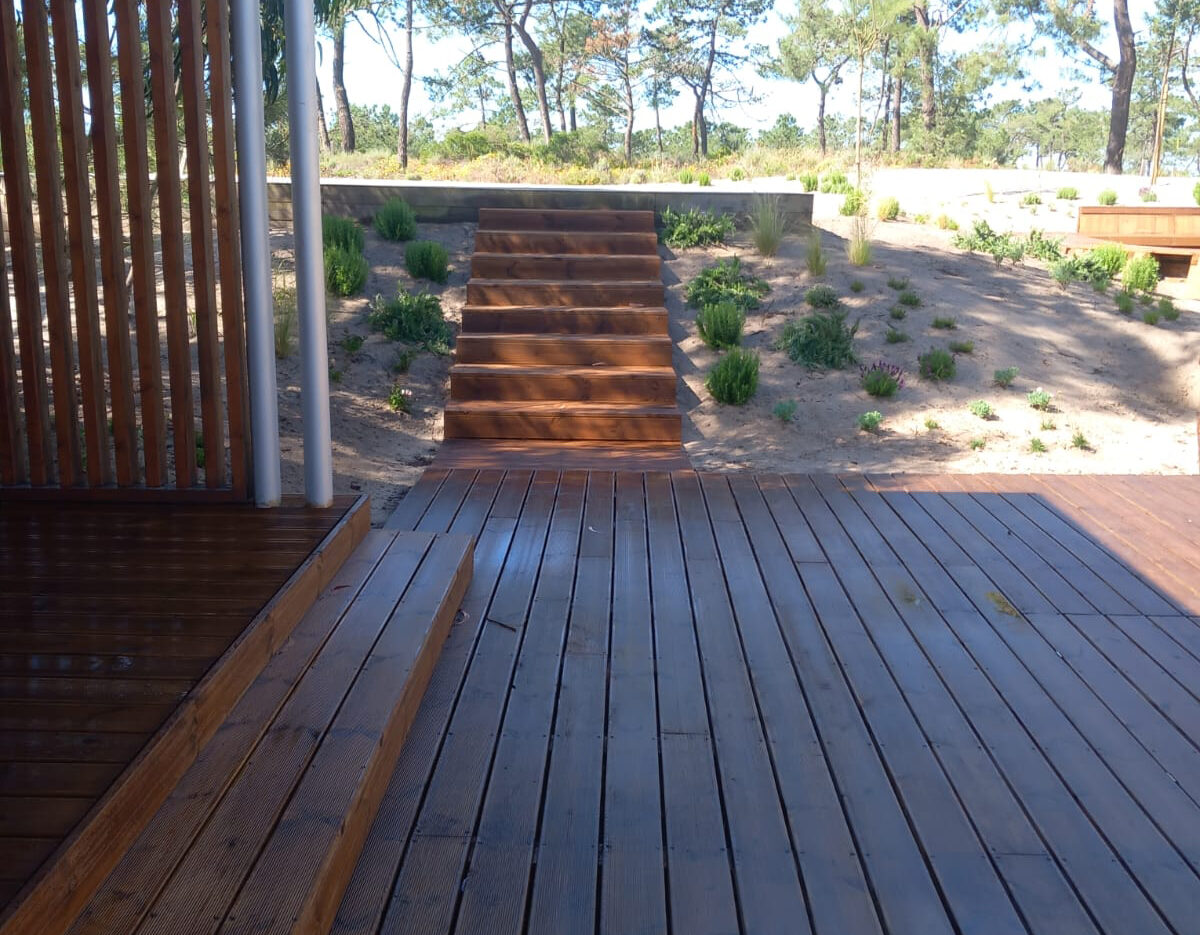
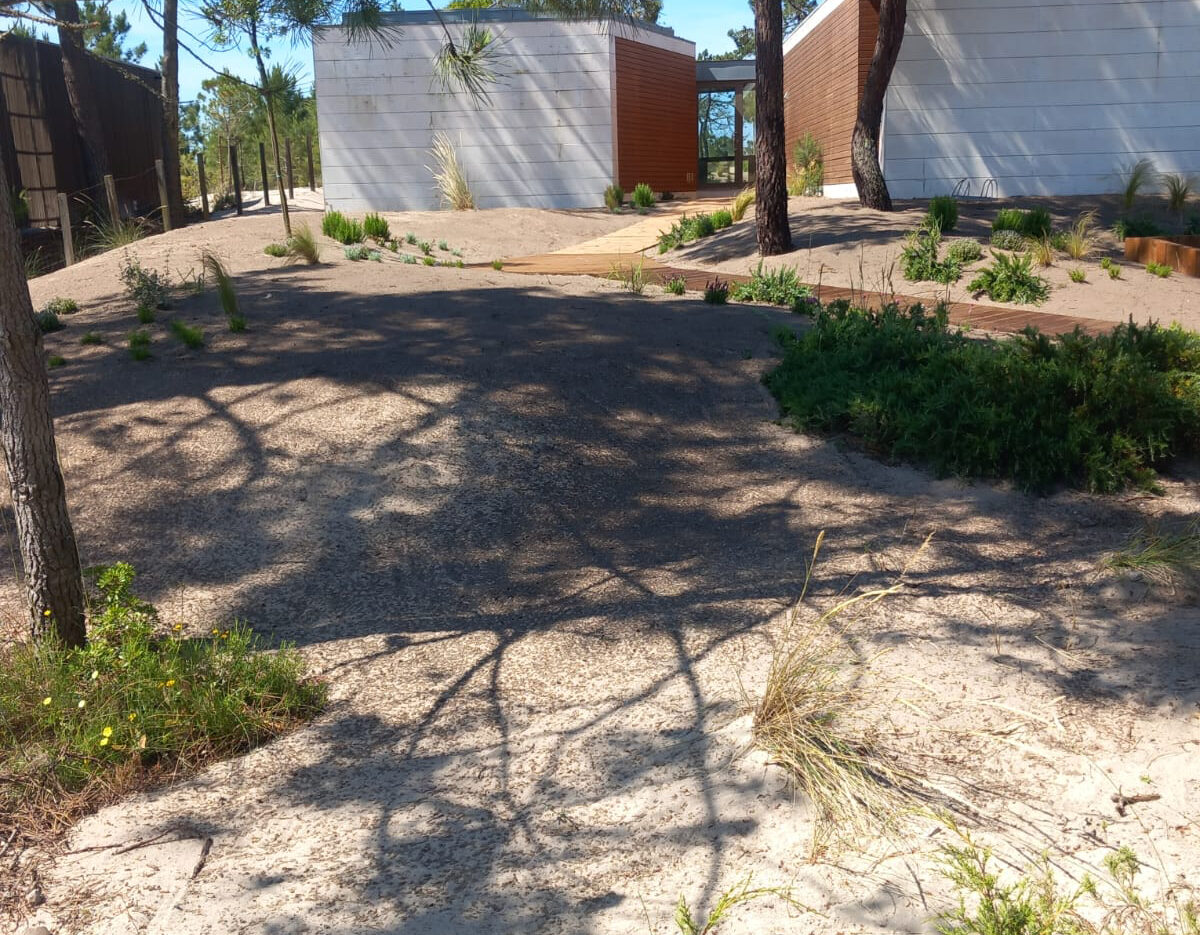
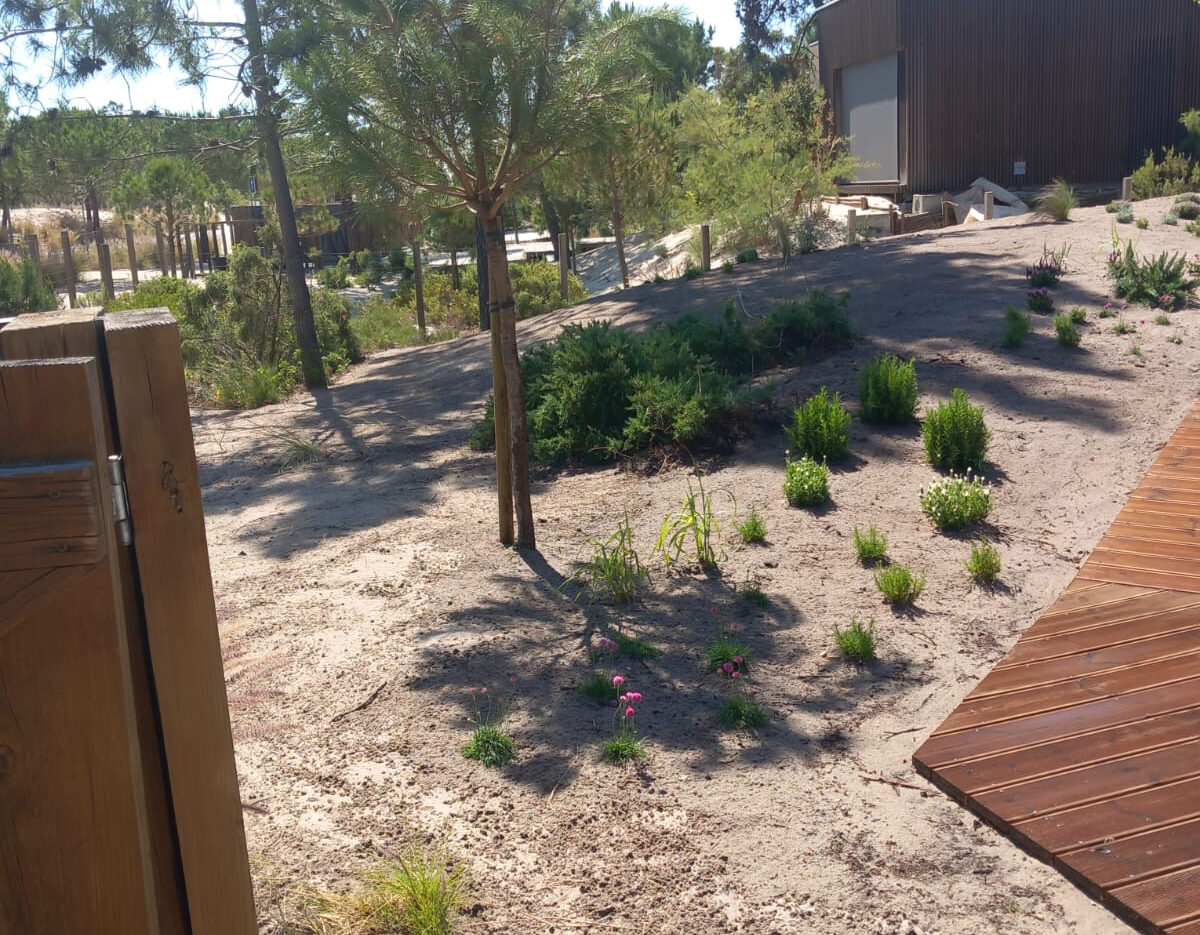
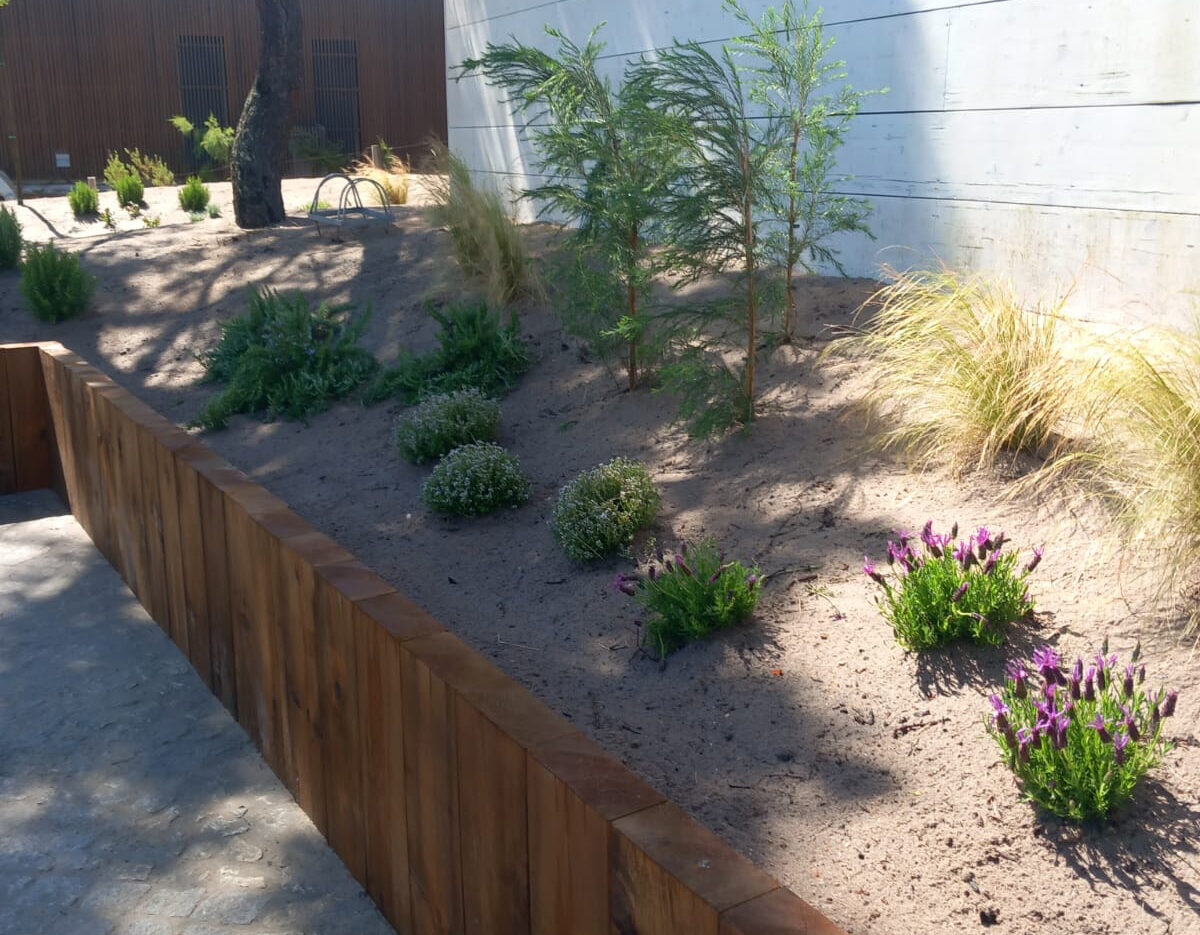
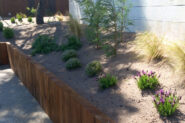
The intervention favored permeable paving, using materials such as coarse sand and wood, and reusing existing elements whenever possible. On the slopes, stabilization was achieved through inverted V-shaped buried beams, while in the chill-out zone a continuous wooden bench-wall was created, extending the deck and following the topography. The installation of an automated buried drip irrigation system ensures controlled water consumption, adjusted to the needs of the species and climate variations.
Native and sustainable vegetation
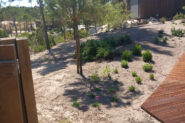
Plant selection was based on adaptation to the soil and climate conditions of Tróia, with native species requiring low maintenance and minimal water. Among the plants used are Armeria maritima, Erica carnea, Helichrysum stoechas, Lavandula stoechas, Stipa tenuissima, and Thymus vulgaris, which provide texture, fragrance, and movement to the space. Shrubs and trees, such as Atriplex halimus, Pistacia lentiscus, Rosmarinus officinalis, Tamarix africana, Cupressus, and Pinus pinea, reinforce the garden’s structure and provide shade and privacy, while climbers like Bougainvillea add color and dynamism. This composition creates a rustic, sensory, and harmonious environment, where tones, fragrances, and textures transform throughout the year, recreating the natural vegetation of the peninsula.
A project that celebrates nature
For Landscape Architect Vera Clara, head of the Green Spaces Design and Construction Department at Horto do Campo Grande, this project symbolizes “the pleasure of enjoying nature in a welcoming and peaceful space that respects the environment and reinforces the identity of the place.”
Agronomist Rita Cabral, site manager, emphasizes that “the diversity of the chosen species allows for a complete sensory experience in a garden that changes with the seasons, awakens the senses, and conveys well-being.”
Learn more about this project by reading the full article here.
Ficha Técnica
Get inspired with us, receive our Newsletter