


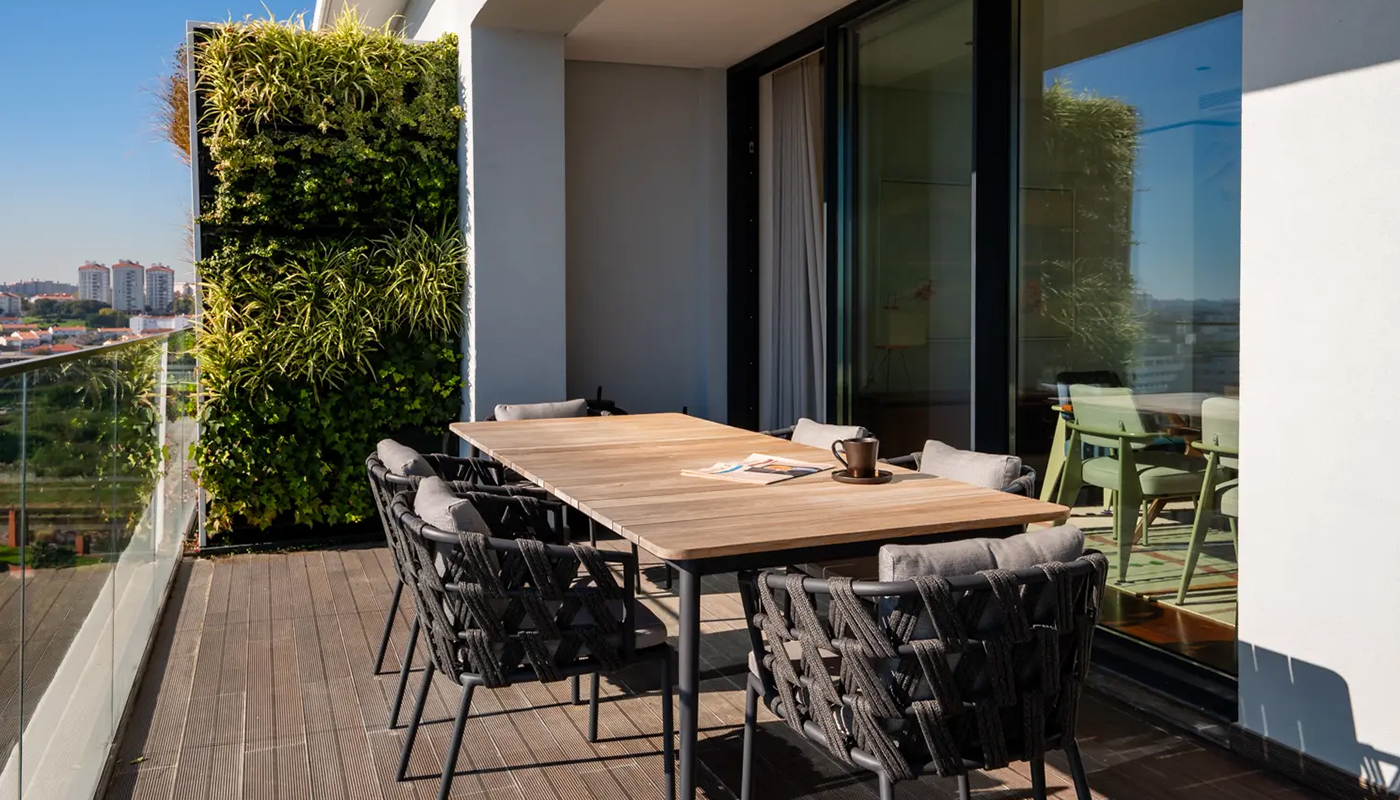





Vertical Gardens
The idea of designing vertical gardens came from French designer Patrick Blanc and has been gaining followers all over the world.
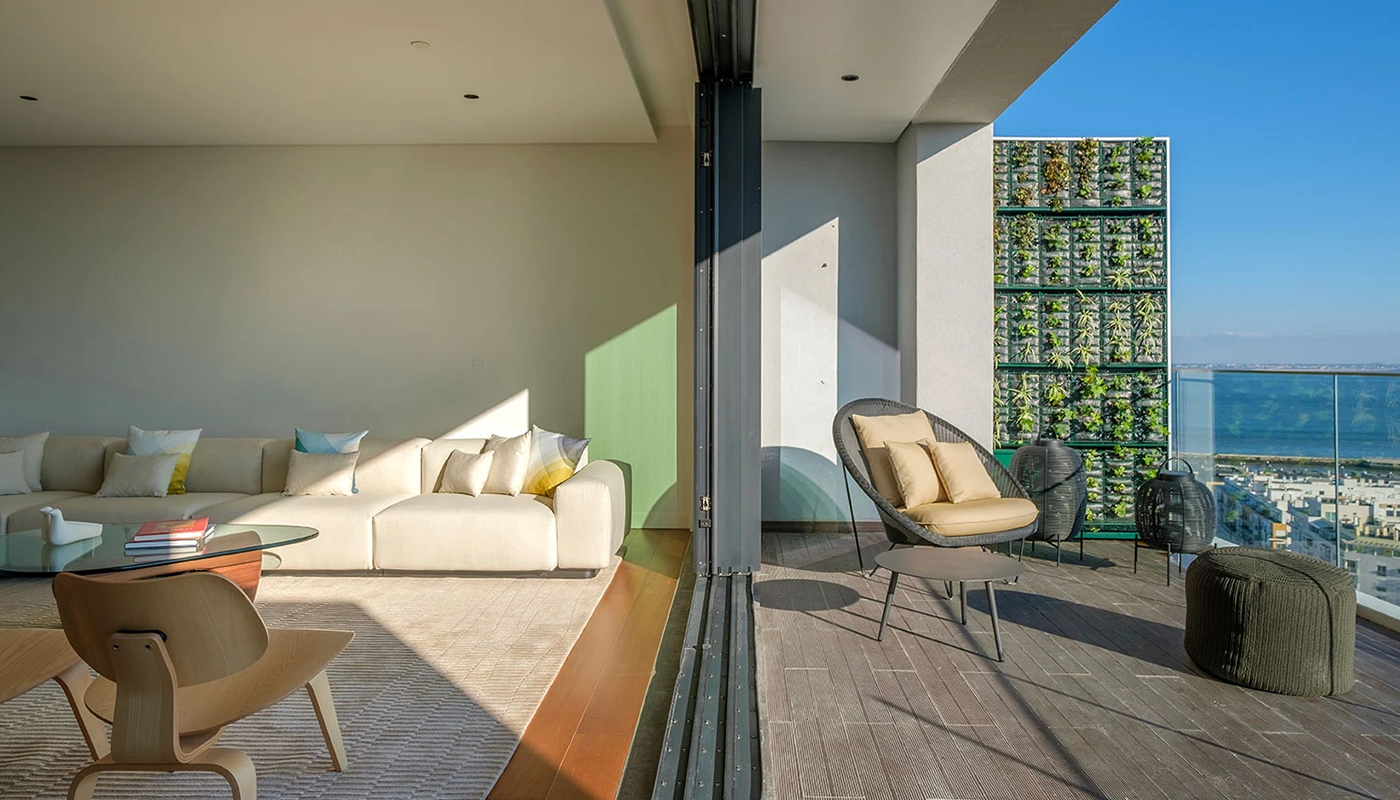
Lack of space is no longer a constraint for those who have always dreamed of having a garden. In small spaces, such as balconies, small terraces, or even indoor areas, plants can “defy gravity,” growing vertically.
Vertical gardens are a creative and functional solution to maximize small areas and adapt to both indoor and outdoor environments, making spaces more “alive” and inviting, as well as a way to distinguish a space through difference and innovation. Beyond all this, it has also been proven that installing green coverings on building facades contributes to good thermal and acoustic performance, moderating temperatures and reducing outside noise.
As this is a living system, the design and execution of the garden must be carried out by a specialised team.
Horto do Campo Grande’s technical team offers the client a careful selection of plant species, depending on the sun exposure, incidence of wind and desired volume, as well as the design and stereotomy of colours and textures obtained by the combination of plant species used, which is suggested to the client before execution.
Plant selection should focus on perennial species with less vigorous roots, of a trailing to semi-trailing character, that do not create much debris and serve as a natural noise barrier. The effect of a plant panel, which is intended to be continuous and covered in greenery, is not immediate, since the species are planted as young plants to allow them to grow on the living wall itself, thus promoting better adaptation and longevity.
Over the past decades, Horto do Campo Grande has installed various types of vertical gardens, with different solutions and different types of structures. This has made it possible to refine our own structure and system, which we believe is optimized in several aspects—technical, aesthetic, economic, and sustainable—and also in terms of maintenance.
This system consists of a metal structure that is fixed to a wall or other type of structure and contains an integrated irrigation system, which is then filled with suitable substrate to receive the planting of species. For the system to function properly, it is necessary to provide a water point and drainage for excess water.
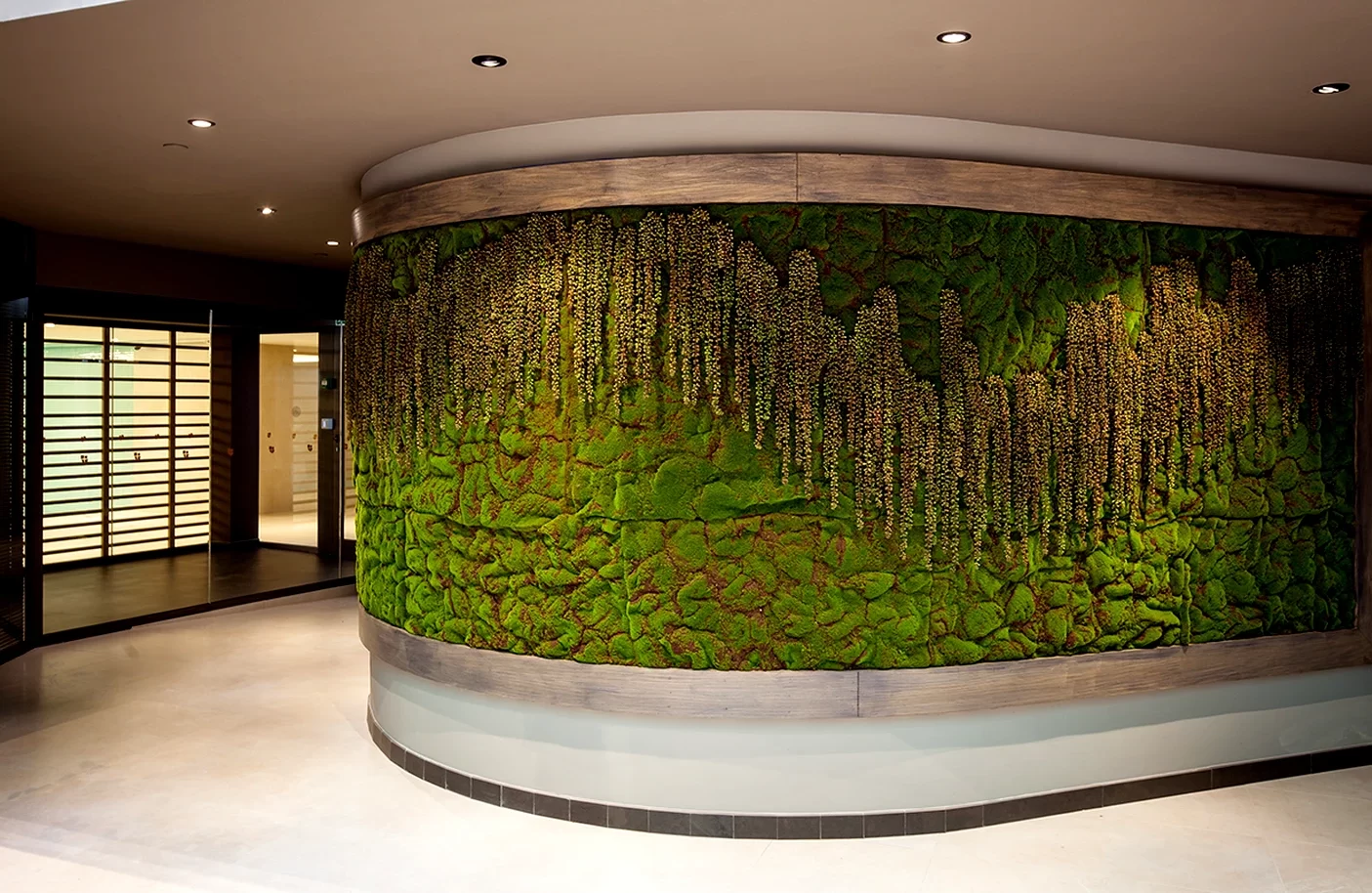
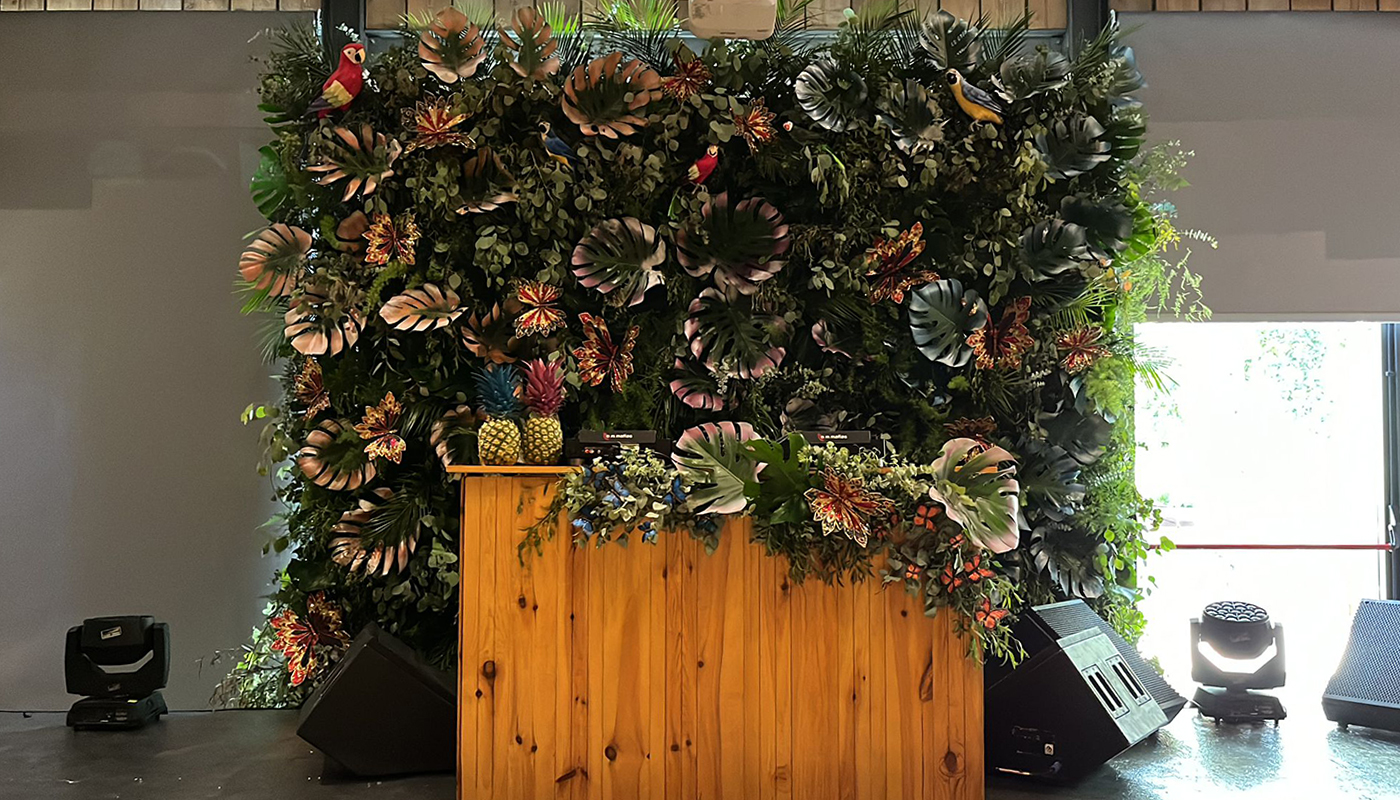
NB: Horto do Campo Grande also carries out Vertical Gardens covered with artificial plants.

Do you know our Blog?


Get inspired with us, receive our Newsletter

All rights reserved - Horto do Campo Grande 2026 ©
Powered by fuzelift

