
Green Park Building, now even more “Green”
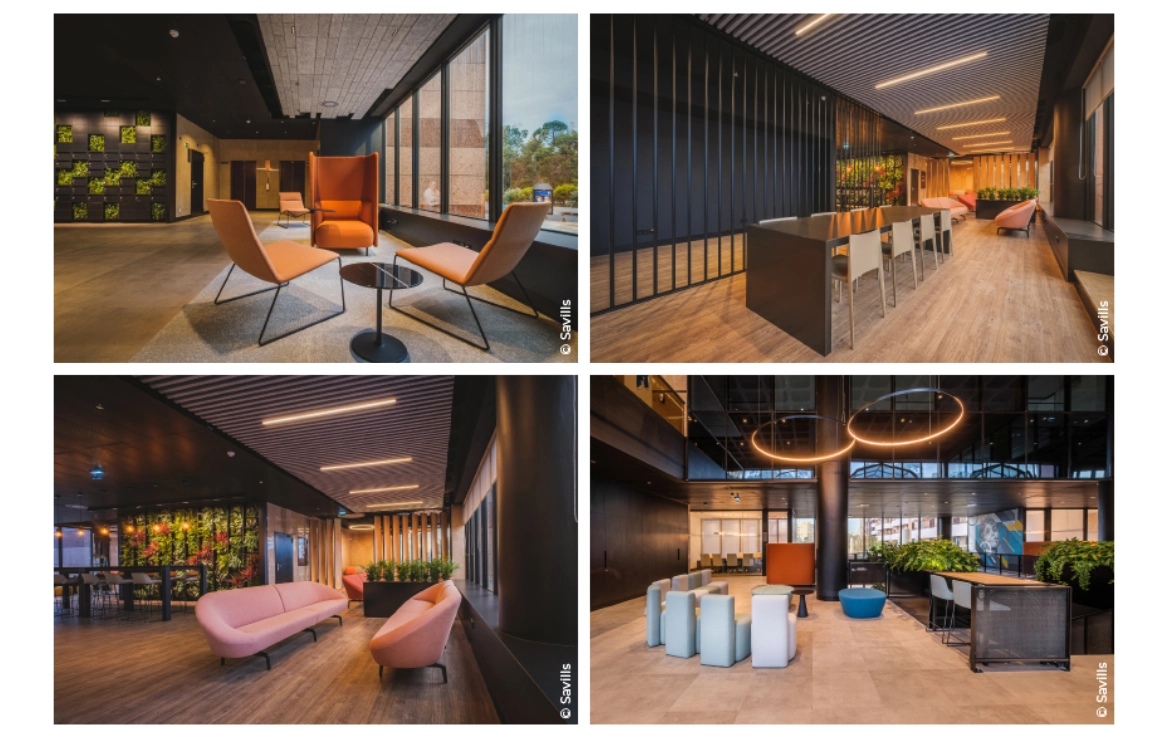
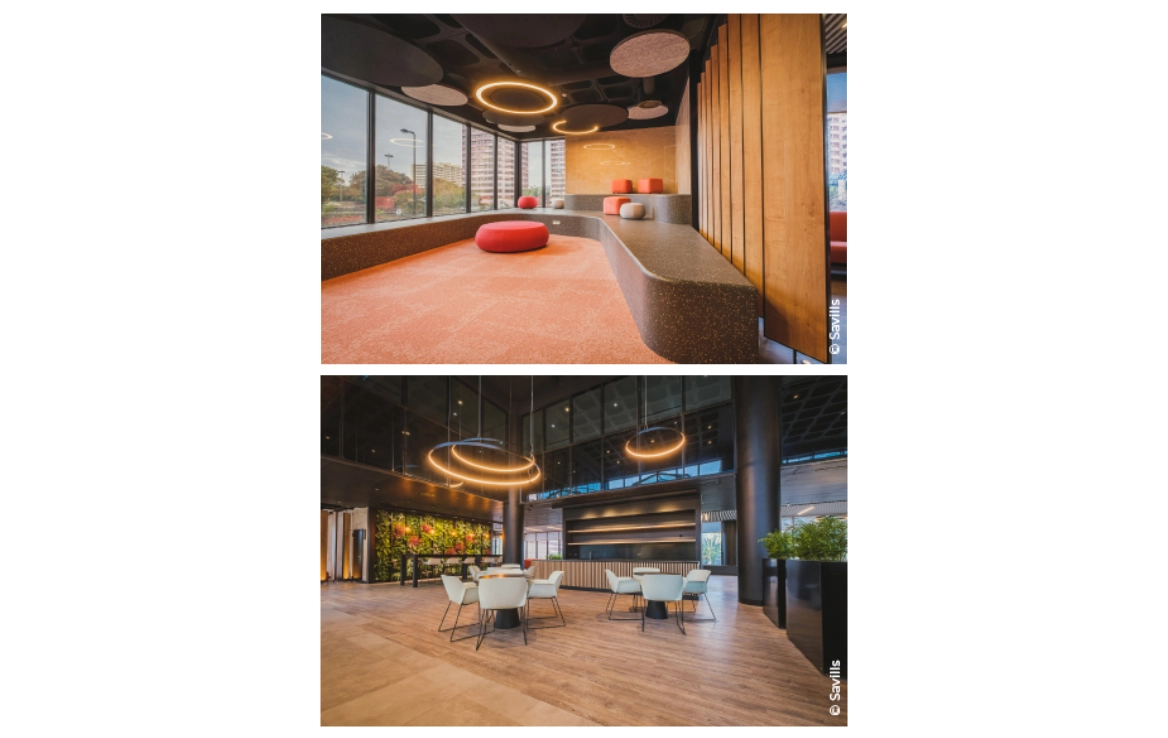
The refurbishment of the common areas of the Green Park Building in Lisbon, developed by Savills Portugal, was based on modernising and energising the entrance floor by introducing new features and settings. With the involvement of Horto do Campo Grande, interaction with nature was prioritised through the selection of plants suitable for indoor spaces.
Located next to Praça de Espanha, this development of over 62,000 m² combines housing, offices and retail, and stands out for its architectural language. However, it no longer matched new trends, which led to a project to enhance its spatial qualities, with the aim of modernising the common areas and strengthening its identity.
Modernization & New Concepts
The project sought to turn the entrance floor into a multifunctional space, going beyond the traditional reception area, with the reorganisation of the open space standing out, placing the reception at the centre and highlighting the double-height ceiling.
Lounge areas, a WorkCafe, work and leisure areas, as well as amphitheatres and meeting rooms were created, promoting a versatile and contemporary space. The industrial concept was maintained, combining a sober aesthetic with natural elements and touches of colour, resulting in a spacious, modern and more welcoming environment.
The power of plants in the “Green Park Building” project
Plants took on a central role, bringing life, comfort and wellbeing to the spaces, encouraging longer use. They act as sculptural elements that evoke nature within the built space, strengthen the indoor-outdoor connection and organise the settings without compromising visual flow.
This balance helps create more welcoming spaces that enhance the user experience and the building’s identity.
Horto do Campo Grande’s proposals
Horto do Campo Grande defined a selection of plants adapted to the climate and light conditions, with the aim of creating a sense of freshness and making the spaces more creative and inviting.
The choice of species took into account sun exposure, natural light, aesthetics and functionality, opting for balanced combinations of simplicity and diversity. Species such as Chamaedorea Elegans, Strelitzia Nicolai, Croton Petras, Dypsis Lutescens, Snake Plant, Calatheas, Peace Lily, Zamioculca and Philodendron Xanadu, among others, were used, ensuring visual harmony and adaptation to different environments.
The result is a renewed space where nature is integrated strategically, reinforcing the building’s modern, dynamic and “green” character.
Find out more about this project by reading the full article here.
Ficha Técnica
Get inspired with us, receive our Newsletter