Succulents are the best allies for those who love plants but don’t have much time to care for them, for those who love growing different species and are always up to date with the latest trends.
Originating from the desert regions of Africa and America, succulents are defined as resilient plants and their name comes from their particular ability to store large amounts of water in their leaves, stems, trunks, and roots, which gives them the “fleshy” appearance they are known for.
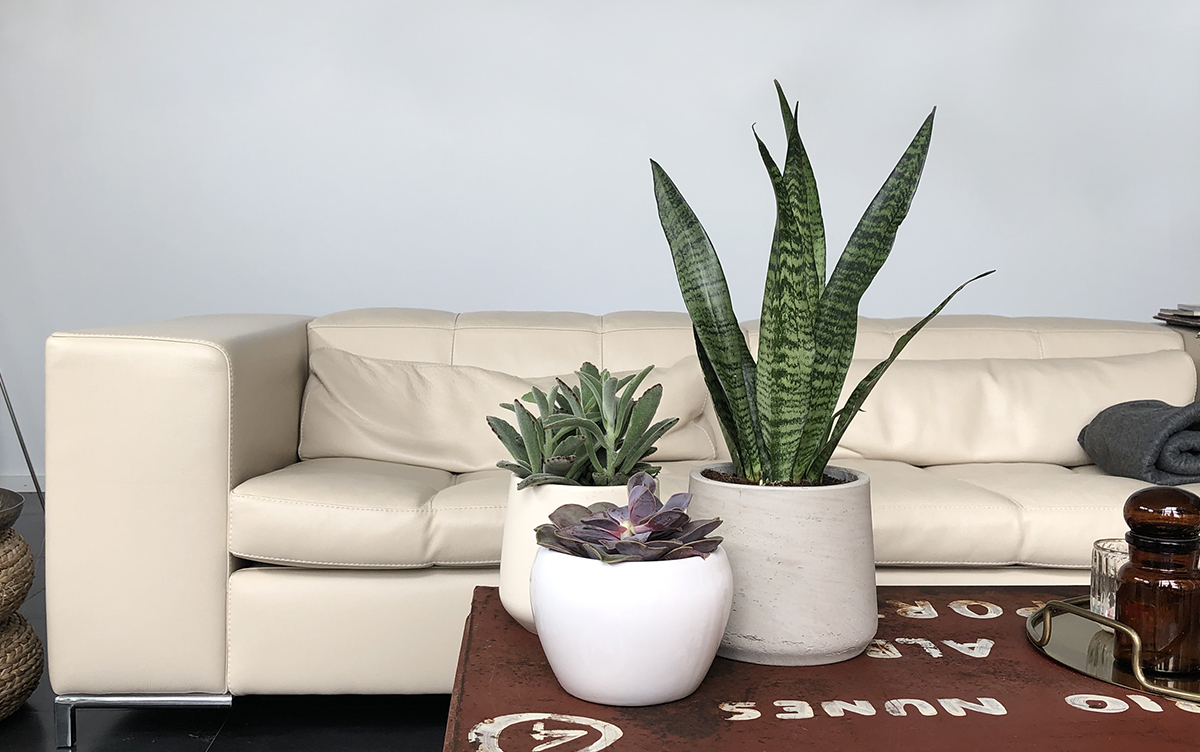
Easy to grow and maintain, requiring little watering, they have gained enormous popularity in decorating spaces, even small ones, whether at home or in an office. Thanks to their beauty, variety of tones and shapes, the combinations for decorating are endless, even when combined with other plants.
There are countless species of succulents, some of which are used for medicinal purposes, such as Aloe, Euphorbia, and Portulaca (or Portulacaria afra). Agave, Echeveria (also known as Stone Rose), Kalanchoe, and Sansevieria (or Snake Plant) are among the most well-known species.
The greener the leaves of these plants, the more suitable they are for indoor placement. Plants with more grayish leaves are defined by a much shorter life cycle and require a bit more care.
Essential Care
Despite being very popular for requiring little time, they still require care to keep your succulents beautiful and healthy. We share some:
Light
You need to ensure generous sun exposure, preferably direct, avoiding placing them on shelves or work desks with little natural light or in bathrooms where the humidity level is very high.
Temperature
Resistant to large temperature ranges, the ideal temperature is around 29°C during the day and 10°C at night.
Watering
In summer, watering should be once a week, but in the cold seasons once a month will be sufficient.
Tip: before watering, check if the soil is dry. If it’s moist, don’t water—excess water is, most of the time, the cause of death for succulents, especially in winter when many species enter dormancy and the amount of water is not reduced.
It’s also important to never wet the leaves to prevent them from rotting.
Signs to pay attention to:
Excess water: the plant shows discoloration in the leaves, which may turn yellowish or white. Even in these conditions, it may still be saved by replanting the succulent in another pot with dry substrate after removing the damaged roots.
Lack of water: Succulents need more water during their peak growth period (spring and summer) and its absence causes leaf drop and stunted growth.
Choosing the Pot
Succulents adapt to most pots, allowing for more creative decoration according to different styles. However, the most suitable ones are those with holes at the bottom because they ensure a drainage system. On the other hand, ceramic pots, for example, will require more frequent watering, and plastic pots are not as suitable for the longevity of succulents. The size of the pot can interfere with the succulent’s development since it grows according to the available space.
Soil and Fertilization
Succulents require light and porous soil and proper fertilization every three months, with a view to creating healthy roots.
There are substrates and fertilizers on the market specifically for your succulents.
Pruning
Succulents don’t need pruning, but it’s important to remove dead or dry leaves so they can grow beautiful and healthy.
Propagation
Easy to multiply, in most cases, the reproduction of these plants is done with their own leaf.
Not all succulents are safe for pets. Some species are pet-friendly, while others can be toxic.
Suculentas seguras para pets (pet-friendly):
- Haworthia (such as Haworthia fasciata, known as “zebra plant”)
- Echeveria (widely used in interior decoration)
- Burro’s tail (Sedum morganianum)
- Houseleek (Sempervivum)
Toxic succulents for pets (NOT pet-friendly):
- Kalanchoe (can cause vomiting, diarrhea, and heart problems)
- Euphorbias (such as Euphorbia tirucalli, its latex is irritating and toxic)
- Aloe vera (although beneficial for humans, it’s toxic to dogs and cats, causing vomiting and lethargy)
- Jade (Crassula ovata, is toxic and can cause vomiting and behavioral changes)
Even if they are pet-friendly plants, it’s always good to prevent your pet from having the habit of chewing them. This habit can lead to ingestion of soil or other chemicals. Make sure the fertilizers or pesticides used on the plants are not toxic, as they can be more dangerous to pets than the plant itself. Keep toxic plants out of reach of your pets by placing them in high or inaccessible locations. Observe your pet’s behavior and if you suspect they have ingested something, seek a veterinarian immediately!
Among the thousands of species of succulents, there will certainly be no shortage of options to decorate your space. Visit our online store and contact us for more information.